
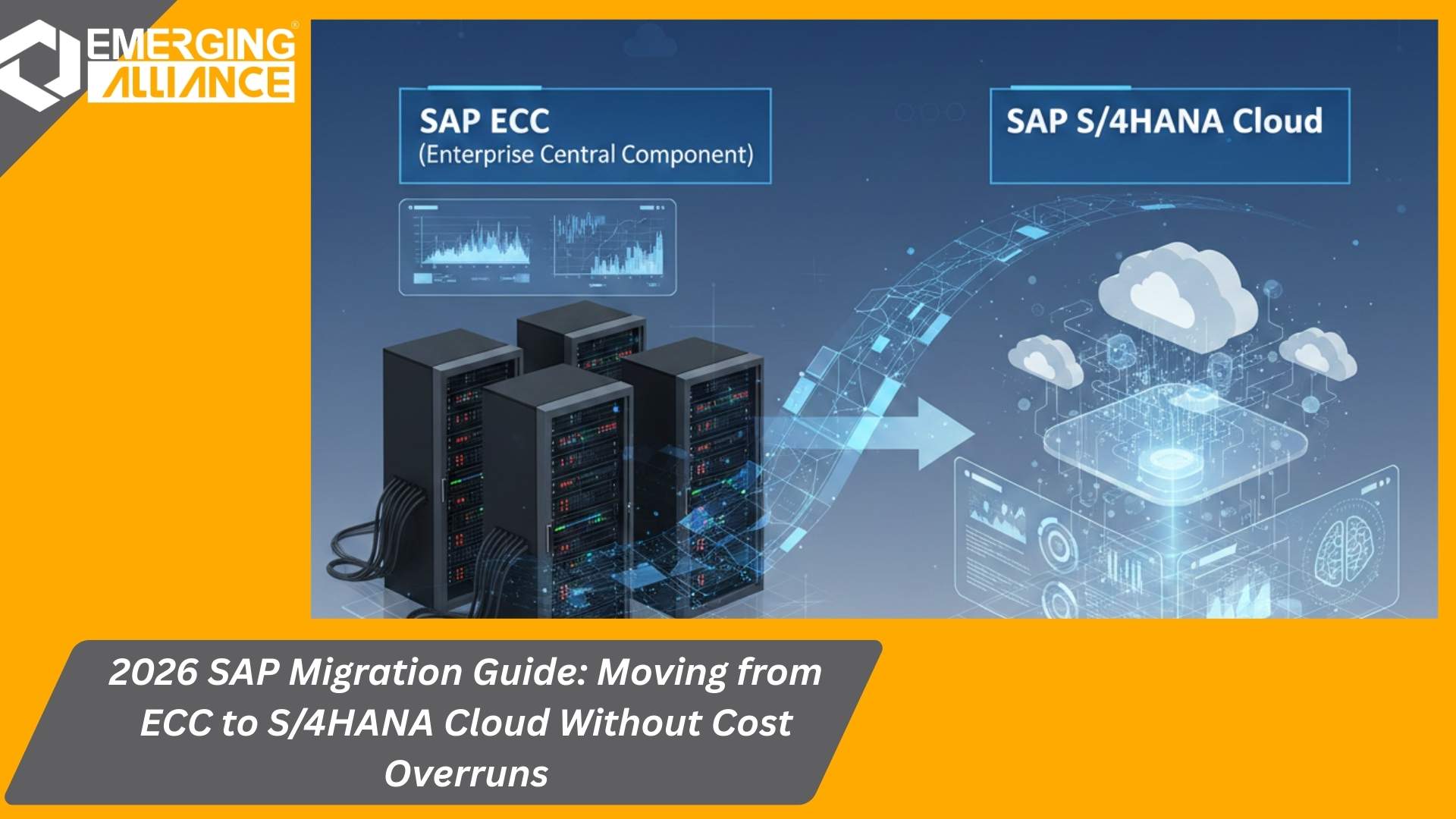
2026 SAP Migration Guide: Moving from ECC to S/4HANA Cloud Without Cost Overruns
Streamline your ECC to S/4HANA Cloud transition for maximum ROI in 2026
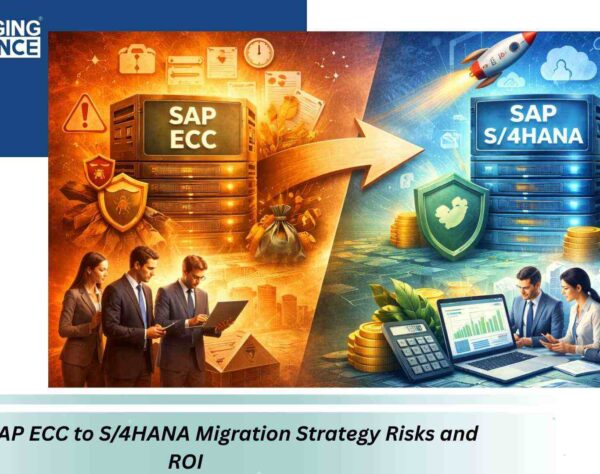
Organizations running legacy ERP landscapes are approaching a decisive moment. With mainstream maintenance deadlines and increasing demand for real-time analytics, businesses must act strategically. A structured SAP Migration roadmap ensures that the shift from SAP ECC (Enterprise Central Component) to SAP S/4HANA Cloud delivers measurable ROI rather than cost overruns.
Emerging Alliance SAP Migration services are designed to help enterprises transition from traditional SAP ECC to S/4HANA Cloud systems to cloud-based enterprise resource planning platforms efficiently, securely, and with financial control.
Strategic SAP Migration Planning for ECC to S/4HANA Transformation
A successful SAP ECC to SAP S/4HANA Migration begins with a structured assessment. Many organizations underestimate the architectural shift from SAP ECC system environments to SAP S/4HANA, which SAP introduced as a next-generation intelligent ERP suite.
Unlike legacy SAP on-premise deployments, SAP S/4HANA Cloud offers embedded analytics, automation, and real-time processing powered by the HANA database. However, moving from SAP ECC to SAP S/4 HANA is not simply a technical upgrade. It requires business process reengineering, data restructuring, and governance alignment.
Emerging Alliance SAP Migration specialists conduct system audits, custom code analysis, and readiness checks before initiating SAP ECC to S4 HANA migration programs. This ensures clarity in scope, budget, and transformation outcomes.
SAP System Transition Roadmap: Choosing the Right Deployment Model
Selecting the appropriate deployment architecture is a critical component of any SAP S/4HANA migration strategy.
Organizations evaluating SAP S/4HANA Cloud must choose between:
- SAP S/4HANA Cloud, Public Edition
- SAP S/4HANA Cloud, Private Edition
- SAP S/4HANA On-Premises
SAP S/4HANA, Public Edition provides standardized processes and rapid deployment for companies prioritizing scalability and cost efficiency. S/4HANA Cloud, Private Edition offers greater flexibility and customization, suitable for complex enterprises transitioning from SAP on-premise systems.
Some organizations prefer SAP S/4HANA On-Premises when regulatory requirements or legacy integrations limit full cloud adoption. However, SAP On-Premise to Cloud Migration is increasingly favored due to reduced infrastructure costs and improved innovation cycles.
Emerging Alliance SAP Migration consultants evaluate operational complexity, compliance requirements, and growth strategy before recommending a deployment model.
SAP Migration Execution: From SAP ECC to SAP S/4HANA Cloud
Executing SAP ECC to SAP S/4HANA Migration requires disciplined governance and phased rollout planning.
Key execution stages include:
- Landscape analysis of the existing SAP ECC system
- Data cleansing and SAP Data migration preparation
- Process redesign aligned with SAP S/4HANA best practices
- System conversion or greenfield implementation
- Testing and validation
SAP Data migration is often the most underestimated phase. Poor data quality inflates costs and delays go-live. Emerging Alliance SAP Migration teams apply structured extraction, transformation, and validation frameworks to ensure accurate data movement from SAP ECC to SAP S/4 HANA environments.
For businesses transitioning On-Premise to SAP S/4HANA Cloud, integration mapping is essential. SAP S/4HANA Cloud integrates with third-party applications, analytics tools, and legacy systems. Careful API planning prevents disruption during SAP on-premise to cloud migration initiatives.
Controlling Costs During SAP Modernization Initiatives
Cost overruns typically stem from scope creep, inadequate preparation, and unmanaged customization. Effective SAP migration cost control depends on:
- Clear transformation objectives
- Defined KPIs
- Minimizing unnecessary custom code
- Phased SAP S/4 HANA migration execution
- Early stakeholder alignment
Organizations moving SAP to SAP S/4 HANA must evaluate whether brownfield, greenfield, or hybrid conversion approaches are appropriate. Greenfield projects allow full process redesign but may increase upfront costs. Brownfield conversions preserve configurations but may limit optimization opportunities.
Emerging Alliance SAP Migration advisors prioritize SAP migration cost optimization by aligning business goals with technical feasibility, ensuring that each transformation phase contributes measurable business value.
SAP Migration Risk Management and Governance
Risk exposure increases during complex ERP transitions. Effective SAP migration risk management includes:
- Data validation checkpoints
- Parallel system testing
- Security compliance reviews
- Change management programs
When migrating from a SAP on-premise system to a cloud-based ERP solution, cybersecurity and access control policies must be redefined. SAP S/4HANA Cloud provides enhanced compliance features, but governance frameworks must be properly configured.
SAP consultants and SAP partners play a critical role in minimizing operational disruption. Emerging Alliance SAP Migration experts combine technical expertise with business process alignment to ensure smooth cutovers.
SAP Migration Outcomes: Unlocking Real-Time Intelligence and ROI
The transition from ECC to S/4HANA unlocks advanced capabilities:
- Embedded real-time analytics
- AI-enabled forecasting
- Automated finance processes
- Integrated supply chain visibility
SAP S/4HANA Cloud enables businesses to operate on a unified data model, improving decision speed and operational agility. Cloud-based enterprise resource planning reduces infrastructure maintenance burdens and accelerates innovation cycles.
When executed correctly, SAP ECC to SAP S/4HANA Migration delivers measurable ROI through streamlined operations and data-driven performance management.
Emerging Alliance SAP Migration ensures organizations achieve these benefits without uncontrolled spending or unnecessary complexity.
FAQs on SAP Migration and ECC to S/4HANA
1. What is involved in an SAP ECC to SAP S/4HANA Migration project?
It involves system assessment, SAP Data migration, business process redesign, deployment model selection, and testing.
2. How does SAP S/4HANA Cloud differ from SAP S/4HANA On-Premises?
SAP S/4HANA Cloud is hosted in a managed cloud environment, while SAP S/4HANA On-Premises is deployed within company infrastructure.
3. What are the main challenges in SAP ECC to S4 HANA migration?
Data quality issues, custom code adaptation, integration complexities, and cost control risks.
4. How can companies manage SAP migration cost optimization effectively?
Through phased execution, minimizing customization, and aligning business objectives with technical design.
5. What deployment options exist in SAP S/4HANA migration strategy?
Organizations can choose SAP S/4HANA Cloud, Public Edition, SAP S/4HANA Cloud, Private Edition, or SAP S/4HANA On-Premises.
6. Is SAP On-Premise to Cloud Migration suitable for regulated industries?
Yes, particularly using S/4HANA Cloud, Private Edition where enhanced control and compliance measures are required.
7. How long does SAP ECC to SAP S/4 HANA transformation take?
Timelines vary based on system complexity, data volume, and customization levels.
8. Does SAP S/4HANA Cloud integrate with legacy systems?
Yes. SAP S/4HANA Cloud integrates with third-party applications using APIs and middleware platforms.
9. What role do SAP consultants and SAP partners play?
They provide architecture guidance, risk mitigation strategies, and implementation oversight.
10. Why is 2026 critical for SAP S/4 HANA migration planning?
Maintenance deadlines and increasing demand for digital transformation make proactive transition planning essential.