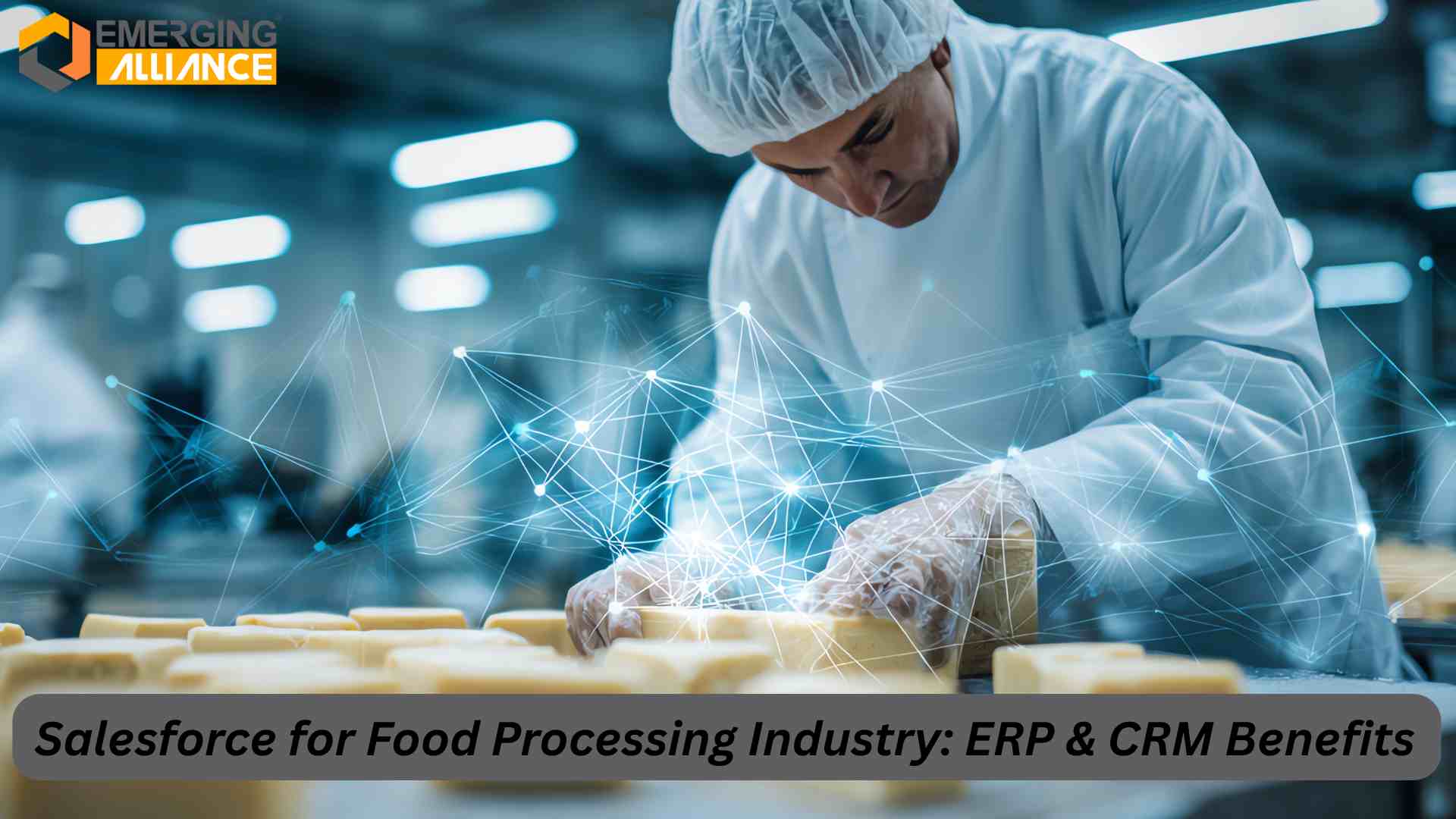
Salesforce for Food Processing Industry: ERP & CRM Benefits
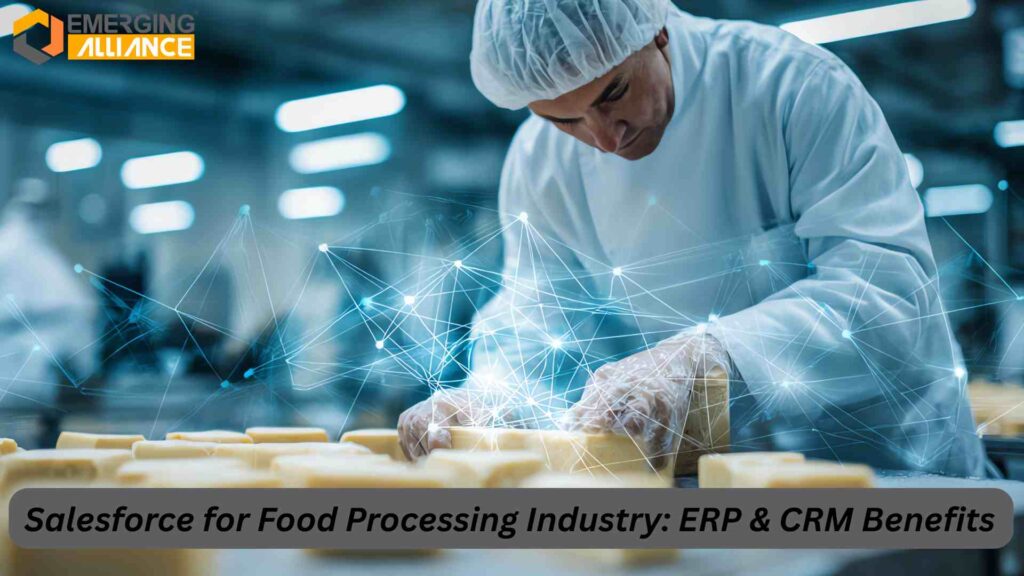
How Salesforce Enhances Customer and Supply Chain Management in the Food Processing Industry
In today’s competitive and regulation-driven food processing industry, managing customers and supply chains efficiently is critical for business continuity and growth. How Salesforce Enhances Customer and Supply Chain Management in the Food Processing Industry is a question many food processing companies ask when seeking scalable digital transformation. With advanced CRM capabilities, seamless ERP integration, and real-time data visibility, the Salesforce platform empowers organizations to improve operational control, customer satisfaction, and long-term profitability.
Salesforce Role in the Food Processing Industry
Industry-specific challenges
Food processing companies operate in an environment shaped by fluctuating demand, strict compliance requirements, traceability needs, and short product lifecycles. Traditional ERP systems alone often lack real-time customer insights and flexible engagement tools.
Salesforce platform advantage
Salesforce bridges this gap by connecting customer data, supply chain processes, and partner networks into a unified CRM solution. Working with a trusted and best Salesforce partner ensures that food processors maximize their Salesforce investment while aligning technology with operational goals.
Enhancing Customer Management with Salesforce CRM
Centralized customer data
Salesforce CRM provides a single source of truth for customer profiles, order history, pricing agreements, and service interactions.
Improved customer engagement
With automation and personalization tools, food processing companies can deliver consistent communication across sales, service, and distribution channels.
Salesforce features for CRM excellence
- Real-time customer insights
- Automated sales workflows
- Predictive analytics for demand trends
- Mobile access for field sales teams
These Salesforce features help organizations strengthen relationships and improve customer retention.
Optimizing Supply Chain Visibility and Control
End-to-end supply chain transparency
Salesforce enables real-time visibility into inventory levels, supplier performance, and order fulfillment status.
Demand forecasting and planning
Using analytics and AI-driven insights, the Salesforce team can help businesses predict demand patterns and minimize stock shortages or overproduction.
Operational benefits
- Reduced supply chain disruptions
- Faster response to demand changes
- Improved supplier collaboration
This makes Salesforce solutions especially valuable for time-sensitive food processing operations.
ERP Integration for Seamless Operations
ERP Integration importance
Many food processors rely on ERP systems for manufacturing, finance, and compliance. Salesforce Integration for Food Processing ensures seamless data flow between CRM and ERP platforms.
Unified business processes
ERP integration connects order management, invoicing, inventory, and customer service into a single ecosystem.
Business impact
- Elimination of data silos
- Improved accuracy and reporting
- Faster decision-making
A Salesforce Consulting Partner plays a key role in designing scalable ERP integration strategies.
Salesforce Implementation for Food Processing Companies
Structured implementation approach
Successful Salesforce implementation requires industry expertise, process mapping, and change management.
Role of implementation services
Professional implementation services ensure system configuration aligns with food safety standards, compliance requirements, and operational workflows.
Why partner expertise matters
Choosing the best Salesforce partner guarantees a smooth deployment, reduced risks, and faster ROI from your Salesforce investment.
Salesforce Managed Services and Ongoing Optimization
Continuous system improvement
Salesforce managed services help food processing companies adapt to evolving business needs without disrupting operations.
Ongoing support areas
- System monitoring and optimization
- Feature enhancements
- Security and compliance updates
- User training and adoption
With expert Salesforce services, businesses maintain long-term platform performance and scalability.
Salesforce Strategy Partner for Long-Term Growth
Strategic roadmap development
A Salesforce Strategy Partner aligns CRM and supply chain initiatives with business goals.
Digital transformation enablement
From advanced analytics to automation, Salesforce consulting partners help organizations unlock the full potential of Salesforce solutions.
Competitive advantage
Strategic Salesforce adoption enables faster innovation, improved customer trust, and operational resilience.
Benefits of Salesforce for Food Processing Industry
Operational efficiency gains
Salesforce improves coordination across sales, supply chain, and service teams.
Customer satisfaction improvement
Consistent communication and faster issue resolution enhance customer loyalty.
Scalable growth platform
The Salesforce platform grows with business expansion, new product lines, and evolving market demands.
Why Food Processing Companies Choose Salesforce Solutions
Salesforce enables food processing companies to modernize customer engagement and streamline supply chain operations through intelligent CRM solutions, real-time data insights, and seamless ERP integration. By partnering with a trusted Salesforce implementation partner and leveraging expert Salesforce services, organizations can improve operational efficiency, ensure regulatory compliance, and drive sustainable, long-term growth.
With Emerging Alliance as a trusted Salesforce partner, businesses gain industry-focused Salesforce services tailored to regulatory compliance and operational efficiency. From demand forecasting to customer lifecycle management, solutions are designed to drive visibility and control. Expert implementation ensures faster adoption, scalable growth, and measurable ROI. Together, Salesforce and Emerging Alliance help food processors achieve sustainable, data-driven success.
FAQs About Salesforce CRM, Features, Benefits, and Implementation
What is Salesforce CRM used for in the food processing industry?
Salesforce CRM is used by food processing companies to unify customer data, manage distributor and retailer relationships, track order lifecycles, and automate sales and service workflows. It enables real-time visibility into customer demand, contract pricing, and service issues—helping teams respond faster while maintaining compliance and traceability standards.
How does Salesforce improve supply chain management in food processing?
Salesforce improves supply chain management by connecting customer demand data with inventory, production planning, and supplier collaboration. Through real-time dashboards, forecasting insights, and automated alerts, food processors can reduce stockouts, control spoilage risks, and improve fulfillment accuracy across complex distribution networks.
Can Salesforce integrate with existing ERP systems used by food processors?
Yes, Salesforce integrates seamlessly with ERP systems commonly used in the food processing industry to synchronize orders, inventory, production, and financial data. This ERP integration eliminates data silos, improves order accuracy, and ensures that sales, operations, and finance teams work from a single source of truth.
Why should food processing companies choose a Salesforce Consulting Partner?
A Salesforce Consulting Partner brings industry expertise, proven implementation frameworks, and technical knowledge required for food processing operations. They ensure Salesforce is configured to support compliance, traceability, and supply chain complexity while accelerating time-to-value and minimizing implementation risks.
Is Salesforce suitable for small and mid-sized food processing companies?
Salesforce is highly suitable for small and mid-sized food processors because of its scalable architecture and flexible licensing. Companies can start with core CRM functionality and gradually expand into supply chain visibility, analytics, and automation as the business grows—without disrupting existing operations.
What are Salesforce managed services and why are they important?
Salesforce managed services provide ongoing platform support, performance optimization, feature enhancements, and user adoption assistance. For food processing companies, managed services ensure the CRM evolves alongside regulatory changes, seasonal demand fluctuations, and supply chain expansion.
How long does Salesforce implementation take for food processing companies?
Salesforce implementation timelines vary based on business complexity, integration requirements, and customization scope. However, with an experienced Salesforce partner, food processors can achieve a phased go-live approach that delivers quick wins while ensuring long-term scalability and system stability.
Does Salesforce support compliance and traceability requirements?
Yes, Salesforce supports compliance and traceability by maintaining detailed audit trails, centralized documentation, and real-time data access. This helps food processing companies meet food safety regulations, manage recalls efficiently, and maintain transparency across the supply chain.
What is Salesforce Integration for Food Processing?
Salesforce Integration for Food Processing refers to connecting CRM with ERP systems, warehouse management, and supplier platforms. This integration enables seamless data flow across customer orders, production planning, inventory levels, and logistics—improving operational accuracy and responsiveness.
Is Salesforce a good long-term investment for food processing companies?
Salesforce is a strong long-term investment for food processing companies because it delivers measurable ROI through improved customer retention, supply chain efficiency, and operational visibility. Its cloud-based architecture, continuous innovation, and ecosystem of partners ensure sustained value as business needs evolve.