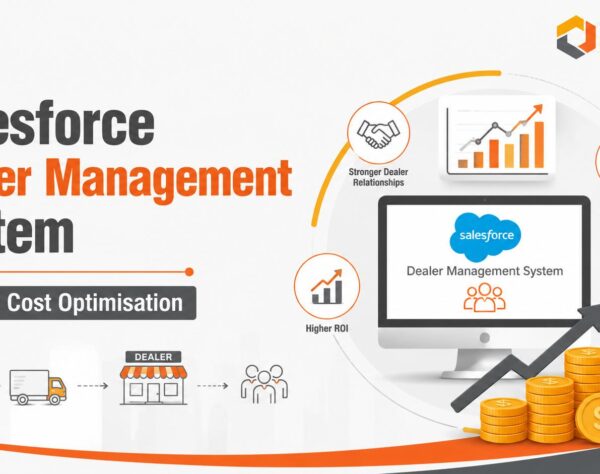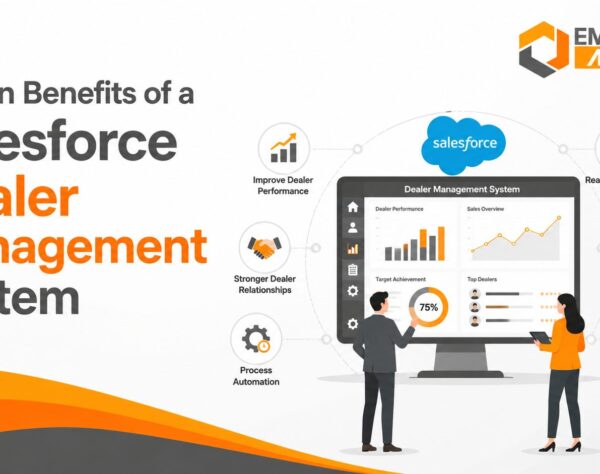


Salesforce DMS Turn Distribution Chaos into Scalable Profitable Growth

The Complete Guide to Achieving Profitable Distribution Growth Using Salesforce DMS
In today’s competitive distribution landscape, operational inefficiencies can quickly erode profitability. Businesses often struggle with fragmented systems, delayed inventory insights, and disconnected dealer networks. This is where a robust Salesforce DMS solution comes into play. Emerging Alliance Salesforce DMS helps organizations transform chaotic distribution processes into scalable, profitable growth by streamlining workflows, improving data visibility, and automating critical operations.
Why distribution chaos happens symptoms, root causes, and business impact with Salesforce DMS
Understanding the reasons behind distribution inefficiencies is crucial for implementing a Salesforce dealer automation system that delivers measurable results.
Common symptoms of distribution challenges
Organizations experiencing distribution chaos often notice:
- Frequent stockouts and overstocks
- Missed orders due to manual workarounds
- High reliance on spreadsheets or siloed systems
- Fragmented data across distributors and dealers
Such inefficiencies can slow growth and limit the effectiveness of your Dealer Management System Salesforce implementation.
Root causes of distribution inefficiencies
The underlying problems usually stem from:
- Fragmented systems that cannot share real-time inventory
- Poor order routing and allocation strategies
- Disconnected dealer and partner channels
- Lack of automation for dealer workflows
Implementing a Salesforce DMS cloud solution addresses these pain points by centralizing operations and providing real-time visibility.
Quantifying the impact
Distribution chaos directly affects your bottom line:
- Lost revenue due to stockouts and delayed shipments
- Inflated carrying costs from overstocked inventory
- Longer order-to-cash cycles
- Damaged customer experiences and dealer dissatisfaction
Using a Salesforce DMS inventory control system mitigates these risks and improves operational efficiency.
What a Salesforce DMS is and how it fixes distribution problems
A Dealer Management System Salesforce implementation is designed to unify your dealership ecosystem, from order processing to dealer communications.
Core capabilities of Salesforce DMS
Modern Salesforce DMS modules offer:
- Unified CRM for sales, service, and marketing
- Order management and inventory visibility
- CPQ (Configure, Price, Quote) for consistent pricing
- Partner and dealer portals to streamline collaboration
This comprehensive approach ensures the right data reaches the right stakeholders at the right time.
Single source of truth
A Salesforce dealer automation system consolidates all dealer, distributor, and supplier data into a single platform. Benefits include:
- Accurate forecasting and demand planning
- Elimination of duplicate data and manual reconciliation
- Improved collaboration between internal teams and external partners
Automation and orchestration
Salesforce automation for dealers enables organizations to:
- Automatically route orders and allocate inventory
- Manage returns and replenishment workflows
- Leverage Salesforce Flow, CPQ, and middleware for seamless operations
This level of automation transforms distribution chaos into scalable growth.
Practical implementation roadmap: move from chaos to an MVP to scale with Salesforce DMS
Implementing a Salesforce Dealer Management System software requires a strategic roadmap that balances speed and precision.
Assess & prioritize
- Map all processes and identify high-impact pain points
- Define your MVP, such as order routing and inventory sync
Data readiness
- Create a master data management checklist
- Deduplicate records and plan migration
- Ensure readiness for Salesforce DMS integration with existing ERP systems
Phased rollouts
- Pilot with select dealers or regions
- Iterate on integrations and expand features gradually
- Onboard users in waves to ensure adoption
This phased approach ensures a smooth transition to a fully functional Dealer Management System Salesforce.
Integration architecture and technical best practices for Salesforce DMS
Optimizing technical architecture is critical for reliable operations of your Salesforce DMS platform.
Integration patterns
- Decide between real-time vs batch sync depending on transaction volume
- Use APIs, EDI, or middleware tools like MuleSoft for scalable integration
- Ensure smooth Salesforce DMS with ERP systems connectivity
Data model & object design
- Choose between standard vs custom objects based on workflow complexity
- Optimize external objects for query performance
- Ensure Salesforce inventory management data is accessible across teams
Reliability & security
- Implement API throttling and error handling
- Define retry logic for failed operations
- Set role-based access and audit trails to secure sensitive data
Operational setup, governance, and change management for Salesforce DMS adoption
Successful adoption requires structured governance and stakeholder alignment.
Stakeholder alignment
- Secure executive sponsorship
- Establish a cross-functional steering committee
- Assign KPI ownership to track Salesforce DMS cost analysis and operational performance
Training & enablement
- Develop role-based training paths for dealers and dispatch teams
- Provide playbooks and in-app guidance for daily operations
- Encourage adoption of Salesforce lead tracking system and inventory modules
Conclusion
Turning distribution chaos into scalable, profitable growth requires a clear strategy:
- Diagnose pain points
- Build a focused Salesforce DMS MVP
- Integrate reliably with ERP and dealer networks
- Govern data and train users
- Measure impact with KPIs and iterate
By doing so, businesses can convert operational drag into measurable margin, scale effectively, and ensure consistent dealer satisfaction.
Book a 30-minute discovery call with Emerging Alliance Salesforce DMS to map a tailored roadmap for your distribution growth.
10 FAQs About Salesforce Dealer Management System
1. What is a Salesforce Dealer Management System platform and how does it help dealers?
A Salesforce Dealer Management System platform centralizes dealer, distributor, and inventory data for streamlined workflows.
2. Can Salesforce Dealer Management System integrate with ERP systems?
Yes, Salesforce DMS with ERP systems allows seamless data flow between sales, inventory, and financial systems.
3. How does Salesforce DMS improve inventory management?
Salesforce Dealer Management System inventory control provides real-time stock visibility, reduces stockouts, and optimizes replenishment.
4. What are the core features of a Salesforce dealer automation system?
Features include CRM, CPQ, partner portals, order routing, and automated dealer workflows.
5. Is Salesforce DMS customizable for unique dealer workflows?
Absolutely Salesforce Dealer Management System customization allows businesses to adapt processes to their operational needs.
6. What is the typical cost analysis for implementing Salesforce Dealer Management System?
Conduct a Salesforce Dealer Management System cost analysis to evaluate licensing, customization, and integration expenses.
7. How can Salesforce automation for dealers boost sales efficiency?
Automation reduces manual work, ensures accurate lead tracking, and accelerates order processing.
8. Which Salesforce Dealer Management System modules are essential for automotive dealers?
Key modules include inventory management, CPQ, dealer portals, and service workflows.
9. Can a Dealer Management System Salesforce solution scale with growth?
Yes, scalable Salesforce Dealer Management System software grows with your dealer network and operational complexity.
10. What is the future of Dealer Management Systems with Salesforce?
The future includes AI-driven analytics, predictive inventory management, and fully automated dealer workflows.