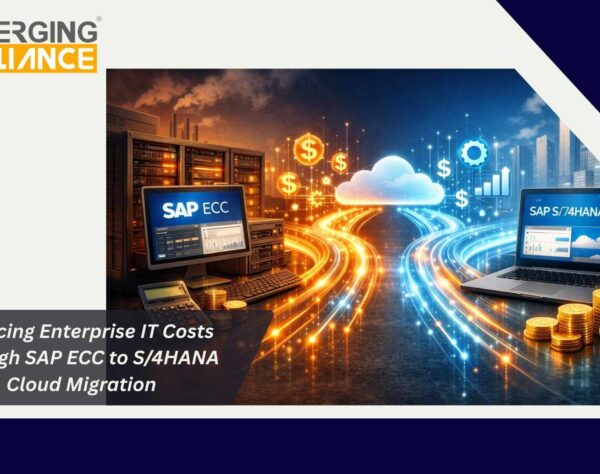

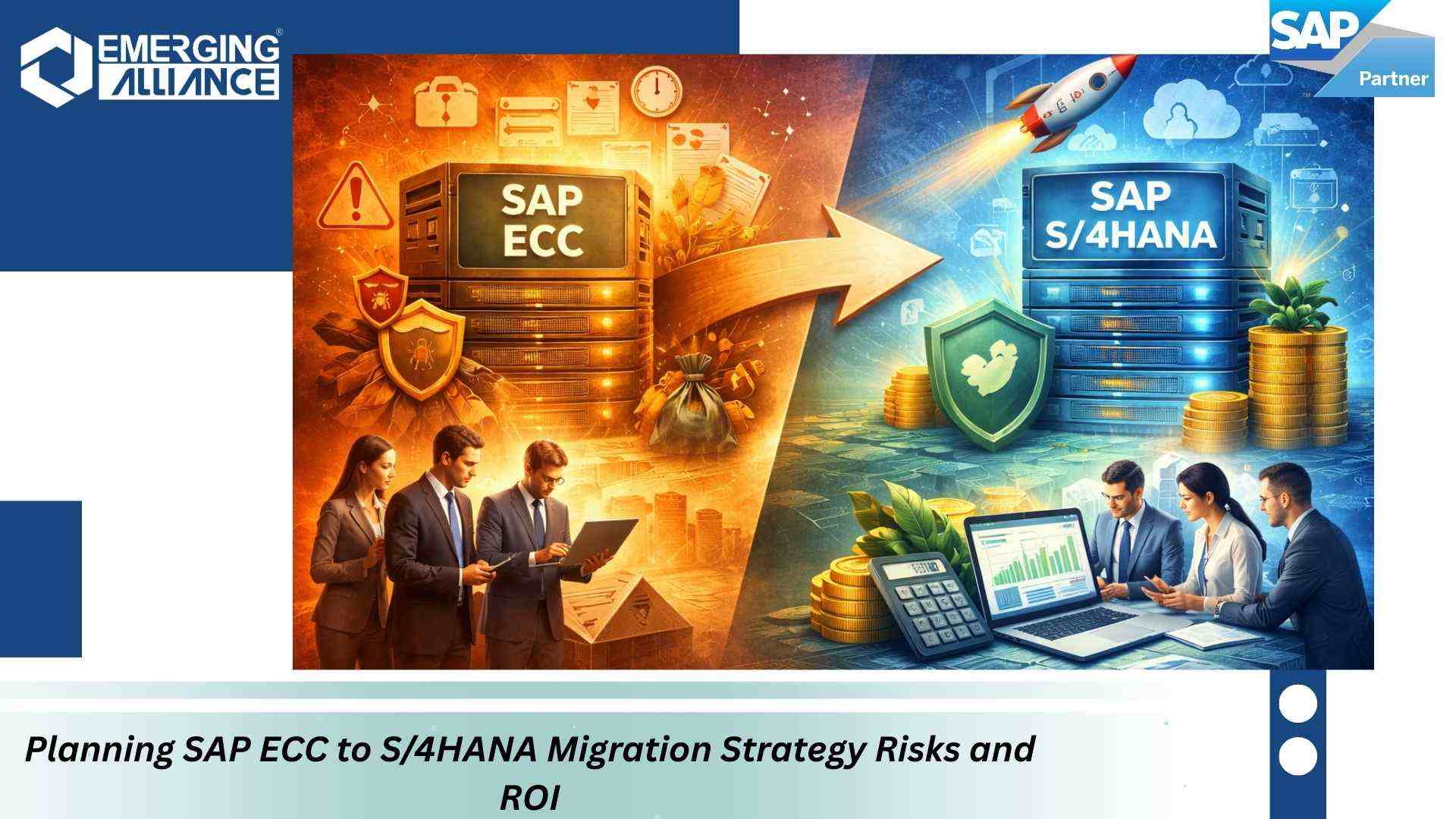
Planning SAP ECC to S/4HANA Migration Strategy Risks and ROI
A decision maker guide to secure cost-optimized SAP cloud ERP transformation
For many enterprises, SAP ECC (Enterprise Central Component) has been the backbone of operations for years. It has supported finance, supply chain, procurement, and production processes across complex global organizations. However, the enterprise technology landscape has changed dramatically. Digital business models now demand real-time analytics, cloud scalability, automation, and integrated data intelligence. Legacy SAP on-premises systems were never designed to support these modern digital requirements. As a result, organizations running an SAP ECC system are increasingly facing limitations in agility, performance, and innovation. This is why enterprises worldwide are accelerating SAP ECC to SAP S/4HANA migration initiatives. Moving to SAP S/4HANA Cloud or SAP S/4HANA On-Premises allows organizations to modernize their digital core and adopt a cloud-based enterprise resource planning architecture that supports long-term growth. Migration is not simply a technical upgrade. It is a strategic business transformation initiative that requires careful planning, risk mitigation, and a clear ROI justification.
The Strategic Importance of Moving from SAP ECC to S/4HANA
The shift from SAP ECC to SAP S/4HANA represents more than an ERP migration. It is an opportunity to redesign the enterprise technology foundation.
SAP S/4HANA Cloud integrates advanced capabilities such as real-time analytics, intelligent automation, and simplified data models that dramatically improve operational efficiency.
A well-planned SAP on-premise to cloud migration enables organizations to:
- Reduce technical debt associated with legacy SAP systems
- Enable real-time enterprise reporting and decision-making
- Simplify complex ERP landscapes
- Lower long-term infrastructure and maintenance costs
- Enable integration with modern digital platforms
Organizations adopting SAP S/4HANA Cloud, Public Edition or S/4HANA Cloud, Private Edition gain the ability to scale operations faster while supporting continuous innovation.
However, the true value of SAP ECC to SAP S/4 HANA migration is realized only when the migration strategy aligns with business outcomes.
Why CIOs Must Treat SAP Migration as a Business Transformation
One of the most common mistakes organizations make is approaching SAP S/4HANA migration as a purely technical project.In reality, the move from SAP ECC system to a cloud-based ERP solution impacts nearly every business function.
Finance teams gain real-time financial visibility.
Supply chains become more predictive and resilient.
Operations teams benefit from improved process automation.
Therefore, the success of an ECC to S/4HANA transformation depends on strategic alignment between IT modernization and business goals.
Organizations that succeed typically follow a structured approach:
- Enterprise system readiness assessment
- Data and process standardization
- Migration roadmap planning
- Risk mitigation and governance
This is where experienced SAP migration consulting partners play a critical role.
Critical Risks in SAP ECC to S/4HANA Migration
While the benefits of SAP ECC to SAP S/4HANA migration are compelling, the transition carries several risks that CIOs must proactively manage.
Data Migration Complexity
Data migration is often the most underestimated challenge in an SAP Data migration project.
Years of operational data stored in an SAP ECC system may contain inconsistencies, duplicates, and outdated records. Migrating this data directly to SAP S/4HANA Cloud without cleansing can lead to operational disruptions and reporting inaccuracies.
A structured data governance and cleansing strategy is essential before migration.
Organizations must evaluate:
- Master data quality
- Historical data relevance
- Archiving strategies
- Data transformation requirements
A well-planned SAP ECC to SAP S4 HANA migration ensures that only clean, relevant, and structured data is transferred to the new digital core.
Operational Downtime and Business Disruption
Large enterprises often operate complex, interconnected systems. During SAP on-premise to cloud migration, downtime or process disruptions can impact operations across finance, manufacturing, logistics, and procurement.
Migration strategies must therefore prioritize:
- Minimal operational disruption
- Phased migration approaches
- Hybrid environments during transition
- System validation before go-live
A carefully designed SAP S/4HANA migration strategy significantly reduces the risk of operational interruptions.
Cost Overruns and Scope Expansion
Another concern for many decision makers is SAP migration cost control.
Without proper planning, projects can expand beyond their initial scope due to:
- Customization complexity
- Integration challenges
- Data migration delays
- Infrastructure upgrades
A structured SAP migration cost optimization strategy ensures organizations maintain predictable budgets while achieving desired business outcomes.
This includes:
- Detailed system readiness assessments
- Clear migration architecture selection
- Governance models to control scope
When managed correctly, SAP cloud ERP transformation delivers measurable ROI while reducing long-term IT operating costs.
Building a Migration Strategy That Maximizes ROI
The key to successful SAP ECC to SAP S/4HANA Migration lies in developing a migration strategy aligned with enterprise priorities.
CIOs and IT leaders must evaluate several strategic options:
Greenfield Approach
A new implementation of SAP S/4HANA Cloud where legacy systems are replaced entirely.
Best suited for organizations seeking:
- Complete process transformation
- Simplified system architecture
- Standardized operations
Brownfield Approach
A system conversion where the existing SAP ECC system is converted to SAP S/4HANA On-Premises or cloud.
Ideal for enterprises wanting to preserve existing business processes.
Hybrid Transformation
Some organizations adopt a hybrid approach combining selective transformation with process redesign.
This approach enables enterprises to modernize while protecting critical operational processes.
Choosing the right SAP S/4 HANA migration approach requires careful evaluation of business complexity, risk tolerance, and long-term IT strategy.
The Long-Term Value of SAP Cloud ERP Transformation
Once organizations transition to SAP S/4HANA Cloud, they unlock a modern enterprise platform designed for agility and innovation.
Key advantages include:
Real-time operational analytics across business units
Simplified ERP architecture
Improved system performance
AI-enabled automation and predictive insights
Scalable infrastructure with cloud-based ERP solutions
More importantly, SAP S/4HANA Cloud integrates seamlessly with digital platforms, enabling enterprises to build a future-ready digital ecosystem.
For companies pursuing enterprise digital transformation, this modern ERP foundation becomes a strategic competitive advantage.
How Strategic SAP Migration Partners Accelerate Success
The complexity of SAP ECC to SAP S/4HANA Migration requires more than technical implementation expertise.
Organizations need a strategic transformation partner who can guide them through:
- SAP system readiness assessment
- Migration roadmap development
- Data migration and governance
- Implementation and integration
- Post-migration optimization and analytics enablement
A partner-led approach ensures that migration initiatives deliver measurable business outcomes rather than becoming costly IT projects.
Turning SAP Migration Into a Strategic Advantage
The transition from SAP ECC to SAP S/4HANA represents one of the most important technology decisions enterprise leaders will make in the coming years.
Organizations that proactively modernize their SAP on-premise systems gain a powerful digital core capable of supporting innovation, automation, and data-driven decision-making.
However, success requires a well-defined SAP S/4HANA migration strategy, careful risk management, and a clear focus on business value.
Enterprises that treat SAP cloud ERP transformation as a strategic initiative rather than just a system upgrade position themselves for long-term operational excellence and competitive advantage.
Our SAP transformation specialists at Emerging Alliance help enterprises confidently navigate the transition with:
- Risk-mitigated, tailored migration roadmaps
- Cost optimization strategies to maximize ROI
- End-to-end support to unlock the full value of SAP S/4HANA Cloud
- A future-ready digital core built for agility and growth
Whether you’re just exploring or ready to move forward, we’re here to guide you at every step.
FAQs About SAP-ECC/S4-cloud Migration
1. When should organizations start planning SAP ECC to SAP S/4HANA migration?
Enterprises should begin planning their migration well before system support deadlines or major digital initiatives. Early planning allows organizations to assess system readiness, cleanse data, and design a migration strategy that aligns with long-term business transformation goals.
2. What factors determine the complexity of SAP ECC to SAP S/4HANA migration?
Migration complexity typically depends on system customizations, data volume, number of integrations, industry-specific processes, and the overall maturity of the organization’s IT landscape.
3. How does SAP S/4HANA Cloud improve enterprise decision-making?
SAP S/4HANA Cloud enables real-time analytics and consolidated data visibility across business units, allowing executives to make faster and more informed operational and financial decisions.
4. What role does system assessment play before SAP migration?
A system readiness assessment evaluates the existing SAP ECC environment, identifies technical debt, analyzes customizations, and determines the most suitable migration path to SAP S/4HANA.
5. Can organizations migrate directly from SAP ECC to SAP S/4HANA Cloud?
Yes. Depending on the organization’s architecture and transformation goals, companies can migrate directly from SAP ECC to SAP S/4HANA Cloud, either through system conversion, new implementation, or selective transformation.
6. How does SAP S/4HANA support enterprise scalability?
SAP S/4HANA provides a simplified data architecture and high-performance processing capabilities that allow enterprises to scale operations, integrate digital platforms, and handle growing transaction volumes efficiently.
7. What operational improvements can companies expect after migration?
Organizations typically experience improved financial transparency, faster reporting cycles, automated workflows, enhanced supply chain visibility, and better integration across business functions.
8. How does cloud ERP transformation reduce long-term IT costs?
Moving to SAP S/4HANA Cloud reduces infrastructure management costs, simplifies system maintenance, and eliminates the complexity associated with legacy ERP environments.
9. What is the importance of governance during SAP migration projects?
Strong governance ensures project scope control, risk mitigation, cost management, and alignment between IT teams and business stakeholders throughout the migration journey.
10. How can organizations ensure long-term success after SAP S/4HANA implementation?
Post-migration optimization, continuous system monitoring, analytics enablement, and process improvement initiatives help organizations fully leverage the capabilities of SAP S/4HANA.
Schedule a consultation or request a demo today to discover how your organization can seamlessly transition from SAP ECC to S/4HANA.
Fill out the form below to get started with Emerging Alliance.