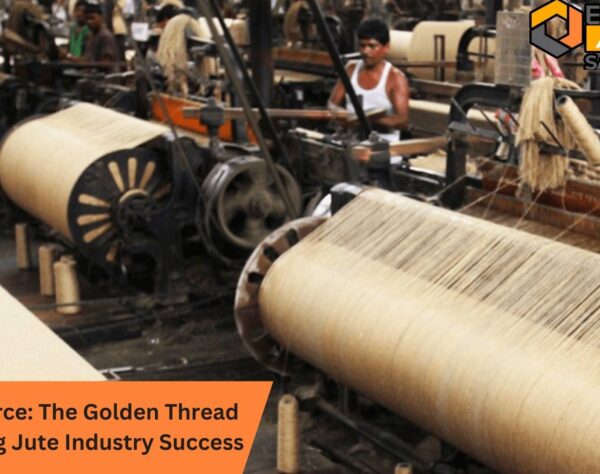


SAP Business One for Jute Industry: Controlling Production Costs, Material Losses and Inventory Risks
Quick Answer
SAP Business One for the jute industry can help manufacturers improve visibility into raw-material procurement, inventory movements, production costs, finished goods, and financial performance. When configured to match mill workflows, it can connect purchasing, warehouse operations, production, sales, and accounting data, helping management identify discrepancies earlier, investigate material losses, and make better-informed operating decisions.
Why Jute Manufacturers Need Stronger Production and Inventory Controls
Jute manufacturing involves several connected activities, from purchasing raw jute and managing supplier deliveries to processing fibre, producing yarn or finished goods, maintaining stock, and fulfilling customer orders. Each stage affects material consumption, production cost, inventory availability, and profitability.
When departments maintain separate spreadsheets or disconnected applications, management may struggle to establish whether differences in stock records reflect actual consumption, recording errors, damaged material, process losses, or delayed transactions.
These problems become more significant when a mill handles multiple raw-material grades, production stages, storage locations, product specifications, or customer orders. A procurement decision made without reliable inventory information can increase unnecessary purchases. Production planned without current material availability can create delays. Cost reports prepared from incomplete transactions can give management an inaccurate view of product profitability.
An ERP system should therefore do more than record transactions. It should help connect material movements with production activity, purchasing commitments, sales requirements, and financial records.
SAP Business One provides an ERP platform that can support these processes when its configuration, master data, and operating procedures are aligned with the requirements of the business.
Raw Jute Procurement and Material Quality
Raw jute procurement can create cost and quality risks when purchase decisions depend on inconsistent supplier records, incomplete goods-receipt information, or limited visibility into material requirements.
Different consignments may vary in grade, quality, moisture condition, or suitability for a particular production requirement. If purchasing, stores, and production teams use inconsistent descriptions or units of measurement, the mill may find it difficult to reconcile ordered quantities, received quantities, accepted material, and actual consumption.
Improve supplier and purchase-order visibility
SAP Business One can centralise supplier records, purchase orders, goods receipts, and supplier invoices within a connected transaction environment. This gives authorised users a more consistent view of purchasing activity and outstanding commitments.
Jute mills can review whether procurement records include the information required for their operating model, such as:
The exact fields, approval steps, and inspection workflows depend on configuration and any required extensions.
Connect procurement with actual material requirements
Purchasing teams need to understand existing stock, committed quantities, expected deliveries, and production demand before raising new purchase orders.
A well-designed ERP workflow can help compare these factors and reduce reliance on manually consolidated reports. Management can then review whether a purchase is required, whether a supplier delivery is overdue, or whether an existing stock balance can satisfy upcoming production needs.
The business objective is not simply to purchase faster. It is to purchase the right material, in the right quantity, at a cost and quality level that supports production requirements.
Inventory Accuracy Across Warehouses and Production Stages
Inventory discrepancies can affect production continuity, working capital, order fulfilment, and financial reporting. A mill may have raw jute in storage, material issued to production, work in progress, yarn, and finished goods at the same time. Each category requires clear transaction records and consistent stock identification.
When stock movements are recorded late or in different systems, the quantity shown in a report may not represent the quantity available for immediate use.
Establish consistent inventory records
SAP Business One supports inventory management through item records, warehouse information, goods receipts, goods issues, transfers, and inventory counting processes. The implementation should define how each material category is identified and how its movements are recorded.
For a jute mill, the design should address:
Where lot or batch traceability is necessary, the project team should confirm the appropriate SAP Business One functionality, configuration, and any additional requirements before implementation.
Reduce the risk of stock shortages and excess inventory
Excess inventory ties up working capital and may create additional storage, handling, and quality-management costs. Insufficient stock can interrupt production or delay customer deliveries.
Inventory planning becomes more reliable when management can review stock balances alongside open purchase orders, production demand, and sales commitments. However, accurate planning still depends on timely transactions, reliable item masters, and realistic lead-time assumptions.
The value of ERP is therefore closely linked to the discipline of the process it supports. A system cannot provide dependable stock visibility if material receipts, production issues, or transfers are routinely recorded late.
Production Cost Control and Material Consumption
Production costs can become difficult to explain when raw-material issues, output quantities, labour-related costs, overhead allocations, and production records are not reconciled consistently.
In jute manufacturing, differences between planned and actual material consumption may arise from variations in incoming material, process losses, rejected output, rework, recording errors, or changes in production conditions. Treating every difference as the same type of loss can prevent management from identifying the underlying cause.
Compare planned and actual production performance
A suitable ERP implementation can connect production orders, material issues, completed output, and related inventory transactions. Where the process design supports it, management can compare expected material requirements with actual recorded consumption.
This analysis should distinguish between:
The purpose is to create a consistent basis for investigation. A variance report should not automatically be interpreted as proof of wastage; the underlying transactions and production conditions need to be checked.
Improve cost visibility by product and production stage
A mill needs to understand how material prices, consumption, processing costs, and production efficiency affect the cost of its products.
SAP Business One provides financial and inventory capabilities that can support cost analysis, subject to the selected costing method, accounting setup, production configuration, and reporting requirements. More specialised cost allocation or production analytics may require additional configuration, reports, or integration.
Management should define which costs must be visible at each level: product, production order, department, plant, or business unit. The implementation should also clarify how overheads are allocated and how production variances are reviewed.
Better cost control begins when management can trace a reported variance to the transaction or production activity that created it.
Financial Visibility and Profitability Analysis
A production issue can become a financial problem when it is not reflected accurately in inventory valuation, cost of goods sold, or management reporting.
For example, an incorrect material issue may affect the stock balance and the cost associated with production. A delayed supplier invoice may complicate purchase-cost reconciliation. Inconsistent product or customer records may make profitability analysis less reliable.
When purchasing, inventory, sales, and accounting are connected through a properly configured ERP environment, finance teams can work from a more consistent transaction base.
Connect operating transactions with financial records
SAP Business One integrates operational transactions with financial processes according to the system configuration and accounting rules. A project should define how relevant purchasing, inventory, production, sales, and accounting events are recorded and reconciled.
Important controls include:
These controls help management assess whether a reported change in cost reflects a genuine business condition or an incomplete or incorrect transaction.
Support better working-capital decisions
Inventory decisions influence cash availability. Buying too early or holding excess material may increase the amount of cash tied up in stock. Buying too late can expose the mill to production interruptions and urgent procurement costs.
Management can use connected purchasing, inventory, sales, and financial information to review stock commitments and operational requirements before making decisions. Forecasting quality will still depend on the reliability of demand assumptions, supplier lead times, and inventory data.
The aim is to support decisions based on current, reconciled information rather than relying solely on periodic spreadsheets.
Production Planning and Customer Order Commitments
Production planning must balance material availability, machine or process capacity, order priorities, delivery commitments, and changing business conditions.
When sales teams promise delivery dates without access to dependable production and stock information, the mill may commit to orders that are difficult to fulfil. Conversely, production may manufacture products that are not aligned with current demand.
An ERP-supported workflow can help teams connect sales orders, inventory availability, purchasing requirements, and production planning. The level of scheduling detail available depends on the production processes and tools selected for the implementation.
Align production with demand and available material
The mill should define how customer orders translate into production requirements and how those requirements affect raw-material procurement. Planning rules should consider existing stock, open orders, expected deliveries, production lead times, and the priority of customer commitments.
Management should also establish how changes are handled when a supplier delivery is delayed, a batch fails inspection, or a customer order changes.
These decisions should be supported by agreed operating procedures rather than depending on informal communication between departments.
Improve order fulfilment visibility
Sales, production, stores, and dispatch teams need a shared view of the information relevant to order fulfilment. This includes material availability, production status, finished-goods stock, and dispatch readiness.
SAP Business One can support connected sales and inventory transactions, while more detailed scheduling, shop-floor data capture, or specialised production planning may require additional tools or integration.
The project team should validate these requirements through real order scenarios before finalising the system design.
Traceability, Quality Records and Operational Accountability
Traceability is important when a manufacturer needs to investigate material quality, production discrepancies, customer complaints, or stock movements. A traceability process should make it possible to identify the relevant material, transaction, production activity, and destination using records appropriate to the business.
For jute mills, requirements may differ according to the products manufactured, customer specifications, contractual obligations, and internal quality procedures.
Define traceability requirements before implementation
The business should decide which information must be recorded at receipt, during production, and at dispatch. This may include supplier references, inspection results, material identifiers, production-order details, finished-goods references, and customer dispatch information.
SAP Business One’s standard capabilities, configuration, and any required add-ons should be assessed against these needs. Not every specialised quality or traceability workflow should be assumed to be available without configuration.
Where barcode scanning, weighing equipment, laboratory systems, or shop-floor applications are required, the implementation team should document how the information will enter the ERP and how errors will be handled.
Strengthen accountability without creating unnecessary administration
Controls are useful only when staff can follow them consistently. Excessive data-entry requirements can lead to workarounds, delayed transactions, and incomplete records.
A practical design assigns responsibility for each transaction, defines the minimum required information, and establishes exception-handling procedures. User permissions and approval rules should reflect employees’ responsibilities and the financial or operational risk of the activities they perform.
The goal is to improve accountability while keeping the process workable for procurement, stores, production, dispatch, and finance teams.
Implementation Requirements for a Jute Manufacturing ERP
Selecting an ERP platform is only one part of the decision. The quality of the implementation depends on whether the system design reflects the mill’s actual processes, data requirements, reporting needs, and control environment.
Before implementation, decision-makers should document current workflows and identify where records are duplicated, reconciliations are manual, or responsibility for transactions is unclear.
Review the existing process and master data
The assessment should cover raw-material purchasing, goods receipt, quality inspection, warehouse movements, production recording, finished-goods management, sales fulfilment, and accounting.
Item descriptions, units of measurement, supplier records, warehouse definitions, costing rules, and opening stock balances should be reviewed before migration. Inconsistent master data can transfer existing problems into the new system.
Separate standard functionality from custom requirements
The project team should classify each requirement as standard functionality, configuration, reporting, integration, or custom development. This makes scope, cost, testing, and support responsibilities easier to evaluate.
Examples that may need specific assessment include specialised raw-jute grading, weighing-scale integration, barcode-based material movement, detailed shop-floor capture, advanced production scheduling, or customised cost-variance reporting.
The team should demonstrate the proposed workflow using realistic mill scenarios instead of relying only on general feature descriptions.
Plan user adoption and ongoing support
Employees need training based on their responsibilities and the transactions they will perform. Testing should include normal operations and exceptions, such as rejected material, stock corrections, partial receipts, production variances, and order changes.
After go-live, management should monitor transaction accuracy, unresolved discrepancies, user adoption, reporting reliability, and system issues. Regular reviews help identify where procedures or configuration need improvement.
How to Evaluate SAP Business One for Your Jute Mill
SAP Business One may be suitable for a jute manufacturer seeking connected purchasing, inventory, sales, production, and financial information. Suitability depends on business complexity, required functionality, integration needs, and the implementation approach.
Before selecting a solution or partner, decision-makers should ask:
The answers should be documented in the solution scope and validated through demonstrations or proof-of-concept scenarios where appropriate.
A suitable ERP implementation should provide more than a central database. It should establish reliable transaction processes, clear ownership, useful exception reporting, and an operating model that management can maintain.
Conclusion
Jute manufacturers need dependable control over raw-material purchasing, inventory accuracy, production consumption, product costing, and order fulfilment. Disconnected records make it harder to explain material differences, identify cost movements, and make decisions with confidence.
SAP Business One can support a more connected operating environment by bringing relevant purchasing, inventory, production, sales, and financial transactions together. The benefits depend on accurate master data, appropriate configuration, well-defined workflows, user adoption, and reliable reporting.
For mill owners and business leaders, the most important step is to identify the control gaps that affect cost, stock accuracy, production continuity, and profitability. The ERP design should then be assessed against those specific requirements, including any integration or customisation needed for jute manufacturing.
Frequently Asked Questions
Request an SAP Business One Demo for Your Jute Manufacturing Operations
If raw-material discrepancies, unexplained production costs, inconsistent stock records, or limited financial visibility are affecting your mill, assess the processes behind those issues before investing in another disconnected system.
Request an SAP Business One demo with Emerging Alliance to review your jute manufacturing requirements, identify relevant control gaps, and discuss an ERP approach aligned with your procurement, inventory, production, and financial workflows.