
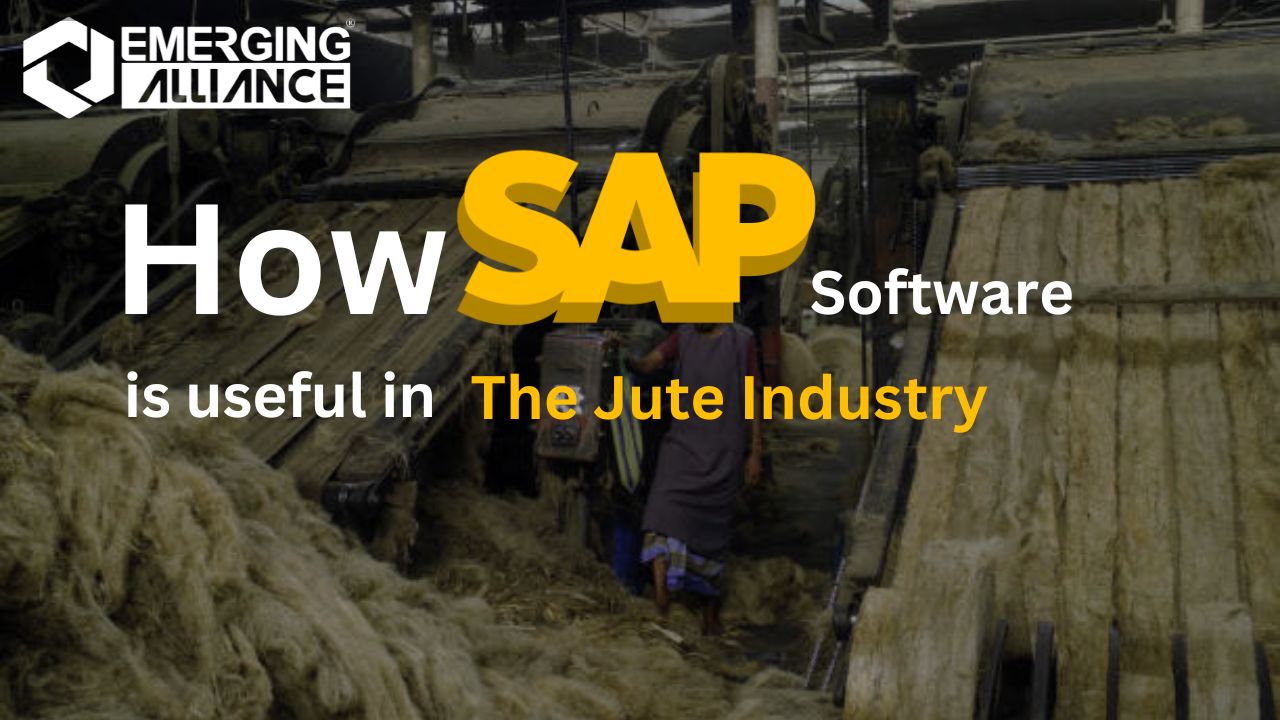
How SAP Software is useful in the Jute Industry
Harnessing Efficiency: How SAP Revolutionizes Jute Production
The Jute industry in India holds a prominent position due to its versatility, with the country being the largest producer of this eco-friendly and biodegradable fiber. Despite its numerous benefits, the industry faces challenges such as price fluctuations and varying demand in a competitive market. To navigate these hurdles and ensure customer satisfaction, jute distributors and manufacturers are increasingly turning to SAP software solutions. By leveraging SAP, they can effectively manage pricing dynamics, monitor demand trends, and optimize their operations to maintain competitiveness in the market.
Here’s how SAP can be a game-changer for the Jute industry:
Enhanced Resource Management through SAP Software for Jute Industry:
From raw jute procurement to finished product delivery, SAP efficiently tracks inventory levels, optimizes production planning, and ensures on-time deliveries. This reduces wastage and ensures you have the right materials at the right time.
Robust Supply Chain Management with SAP Solutions:
SAP connects the entire supply chain – farmers, manufacturers, distributors, and retailers. This real-time visibility allows for better coordination, faster response to market fluctuations, and improved collaboration with stakeholders.
Financial Control & Visibility through SAP Integration:
SAP integrates all financial processes – accounting, budgeting, and forecasting. This provides jute businesses with a clear picture of their financial health, facilitates informed decision-making, and helps identify areas for cost optimization.
Improved Customer Relationship Management (CRM):
SAP’s CRM module helps jute businesses manage customer interactions effectively. It fosters stronger relationships, personalizes marketing campaigns, and streamlines order processing, leading to increased customer satisfaction and loyalty.
Data-Driven Decision Making:
SAP empowers jute businesses with real-time data and insightful analytics. This data can be used to identify trends, optimize operations, make informed decisions about production, pricing, and marketing strategies.
Beyond these core functionalities, SAP offers industry-specific solutions for the Jute industry, such as:
Quality Management: Ensure consistent jute quality throughout the production process.
Production Planning & Scheduling: Optimize production schedules based on real-time demand and resource availability.
Compliance Management: Meet regulatory requirements and ensure ethical sourcing practices.
In conclusion, SAP software is not just a software solution; it’s a strategic investment for the jute industry. By implementing SAP, jute businesses can gain a significant competitive edge, navigate the evolving market landscape, and unlock their true potential.
To learn more about our services and solutions, visit us at: https://emerging-alliance.net/
Ready to dive deeper into the topics you love? Visit our website to explore a treasure trove of valuable content, resources, and insights that will captivate your mind and fuel your curiosity!
Want to speak to an expert? Fill in the form below, and we will be in touch with you shortly!
Top FAQs about SAP for Jute Industry
1. What is SAP software and how is it applied in jute manufacturing?
SAP is an enterprise resource planning (ERP) system that integrates procurement, production, inventory, finance, and sales into one platform. In jute manufacturing, it streamlines raw material sourcing, production monitoring, cost control, and distribution management to improve efficiency and visibility.
2. How does SAP help manufacturers manage raw jute price fluctuations?
SAP enables real-time monitoring of supplier contracts, procurement history, and pricing trends. This supports better forecasting, strategic purchasing decisions, and reduced exposure to market volatility.
3. Can SAP improve supply chain coordination for fiber-based production businesses?
Yes. SAP connects farmers, mills, warehouses, distributors, and retailers through centralized data. This improves demand forecasting, reduces delays, and enhances coordination across the value chain.
4. How does SAP enhance inventory control in jute mills?
SAP provides real-time stock tracking for raw materials, work-in-progress, and finished goods. Automated replenishment planning reduces shortages, excess stock, and carrying costs.
5. What financial advantages does SAP offer to jute manufacturers and exporters?
SAP integrates accounting, budgeting, cost analysis, and forecasting. This delivers accurate financial reporting, clearer profitability insights, and improved cost optimization.
6. Does SAP support quality management in fiber processing units?
Yes. SAP’s Quality Management module tracks inspections, manages quality standards, and documents compliance checkpoints across production stages, reducing defects and ensuring consistency.
7. How does SAP optimize production planning and scheduling?
SAP aligns production plans with demand forecasts, machine capacity, and resource availability. This minimizes downtime, improves throughput, and ensures timely order fulfillment.
8. Can SAP help companies meet compliance and sustainability requirements?
SAP maintains detailed audit trails, certification records, and sourcing documentation. This supports regulatory compliance and demonstrates responsible procurement practices.
9. How does SAP improve customer management for distributors?
Through its CRM capabilities, SAP centralizes customer data, automates order processing, and supports targeted communication strategies, improving service levels and retention.
10. Is SAP suitable for small and mid-sized enterprises in the jute sector?
SAP offers scalable ERP solutions tailored to different business sizes. With structured implementation, small and mid-sized firms can improve operational control and data-driven decision-making.