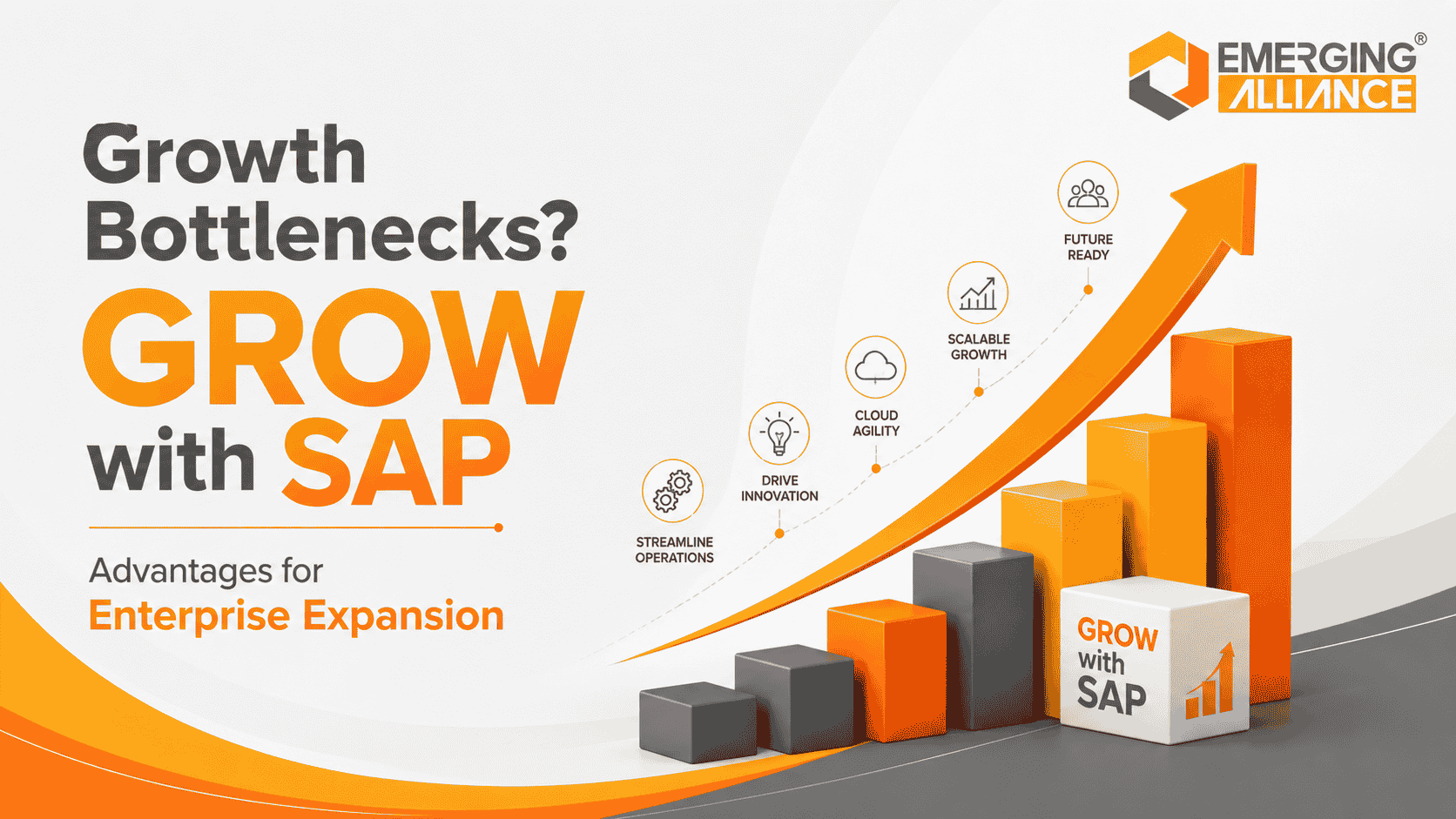
Growth Bottlenecks? GROW with SAP Advantages for Enterprise Expansion

GROW with SAP for faster scaling, process automation, operational efficiency, and measurable ROI
GROW with SAP helps growing companies replace fragmented processes with SAP Cloud ERP, standardized best practices, embedded analytics, automation, and a scalable software-as-a-service operating model. Its value lies in reducing operational friction while creating a controlled foundation for expansion.
Growth Turning into Operational Complexity
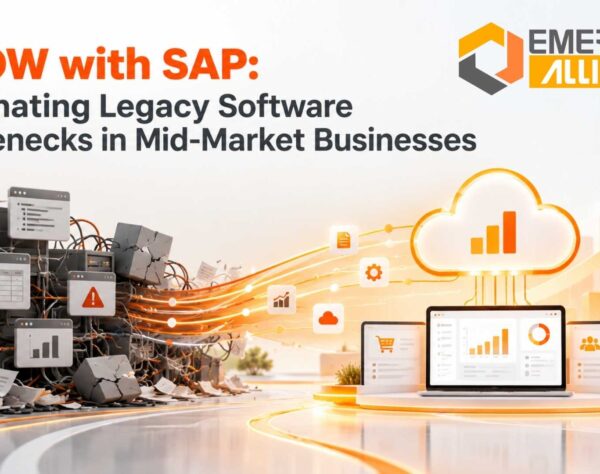
Business expansion adds customers, transactions, employees, products, suppliers, locations, and regulatory obligations. When the underlying systems cannot scale at the same pace, growth begins to expose weaknesses across finance, procurement, inventory, sales, manufacturing, and reporting.
Spreadsheets multiply. Teams enter the same data in different applications. Reports require manual consolidation. Approvals slow down, inventory visibility declines, and leaders make decisions using delayed information. These are not isolated IT issues; they are operating-model constraints.
GROW with SAP is designed to help organizations move to SAP S/4HANA Cloud Public Edition through a packaged cloud ERP offering. SAP positions the solution around preconfigured best practices, subscription-based cloud delivery, continuous innovation, and support for scalable business processes.
What Are Enterprise Growth Bottlenecks?
Enterprise growth bottlenecks are process, data, system, governance, or capacity constraints that prevent a company from scaling efficiently. They increase the cost and risk of growth because transaction volumes rise faster than operational capability.
| Bottleneck | Business Impact |
| Manual workflows | Approvals, reconciliations, order processing, and reporting depend on spreadsheets, email, or repeated data entry. |
| Disconnected systems | Finance, sales, procurement, inventory, and operations maintain separate records, creating duplication and inconsistent information. |
| Delayed reporting | Management reports require manual preparation, limiting timely performance and cash-flow visibility. |
| Limited scalability | Adding entities, users, locations, or transaction volumes creates performance, integration, or governance problems. |
| Compliance pressure | Controls, audit evidence, access management, and local reporting become harder to maintain as the business expands. |
| Customer-service gaps | Stockouts, delayed fulfilment, inaccurate invoices, and slow responses affect customer retention and revenue. |
The Most Important GROW with SAP Advantages
1. Scalable Cloud ERP Foundation
SAP S/4HANA Cloud Public Edition is delivered as software as a service. SAP manages core cloud operations such as installation and upgrades, allowing internal IT teams to spend less time maintaining infrastructure. A standardized cloud foundation also makes it easier to support additional users, processes, and organizational growth without reproducing a separate system landscape for every expansion.
2. Faster Time to Value
GROW with SAP uses preconfigured processes, SAP Best Practices, guided implementation assets, and the SAP Activate methodology. This fit-to-standard approach can reduce design complexity compared with heavily customized ERP programmes. Actual timelines still depend on scope, integrations, data quality, localization, testing, and organizational readiness.
3. Standardized End-to-End Processes
Growing companies often accumulate different procedures across departments, sites, and business units. GROW with SAP provides predefined process models that help establish consistent ways of working. Standardization improves governance, simplifies training, creates comparable performance data, and makes future automation easier.
4. Process Automation
Cloud ERP workflows can reduce manual handoffs in areas such as approvals, invoice processing, procurement, order management, and financial operations. Automation is most valuable when the business first removes unnecessary process variation; automating a poor process only makes the inefficiency move faster.
5. Embedded Analytics and Real-Time Visibility
SAP S/4HANA Cloud Public Edition is designed around a shared digital core and embedded analytical capabilities. Role-based reports and dashboards can help finance and operational leaders monitor current performance without relying entirely on offline consolidation. The business benefit is earlier identification of margin pressure, inventory exceptions, overdue receivables, fulfilment delays, and process bottlenecks.
6. Built-In AI Capabilities
SAP Cloud ERP includes AI-enabled features within relevant business processes. Depending on the licensed scope and release, these capabilities can support productivity, recommendations, document processing, forecasting, and exception handling. Businesses should evaluate specific AI use cases during solution design rather than treating AI as a generic implementation outcome.
7. Integration Across the Application Landscape
Growing organizations rarely operate one application. SAP Integration Suite can connect SAP and third-party applications, data, APIs, events, and processes across cloud, on-premises, and hybrid landscapes. Integration scope, architecture, licensing, and governance should be confirmed during implementation planning.
8. Stronger Governance and Operational Control
Role-based access, workflow approvals, process transparency, and auditable transaction records can strengthen internal control. These capabilities support compliance readiness, but they do not automatically guarantee regulatory compliance. The organization remains responsible for process design, access governance, localization, evidence retention, and control testing.
9. Continuous Innovation
A SaaS ERP model provides regular product updates and access to new capabilities without a traditional on-premises upgrade project. To gain value from these releases, companies need release-management discipline, regression testing, user communication, and a controlled extensibility strategy.
10. Lower Technology Complexity
GROW with SAP can reduce dependence on self-managed infrastructure and fragmented applications. However, total cost of ownership depends on subscription scope, implementation services, integrations, extensions, data migration, support, and organizational change. A business case should compare full lifecycle costs rather than software fees alone.
Business Outcomes by Function
| Function | Potential Improvement | Example KPI |
| Finance | Faster close, improved receivables visibility, more consistent controls | Days to close; DSO; reconciliation effort |
| Procurement | Controlled purchasing and clearer supplier performance | Purchase cycle time; contract compliance |
| Inventory | Improved stock visibility and exception management | Inventory accuracy; stockouts; inventory turns |
| Sales | More consistent order processing and pricing | Order cycle time; fulfilment accuracy |
| Manufacturing | Better production planning and material visibility | Schedule adherence; throughput; scrap |
| Leadership | More timely cross-functional performance insight | Report preparation time; forecast accuracy |
| IT | Lower infrastructure administration and more standardized releases | System availability; support effort; change lead time |
Where GROW with SAP Fits Best
GROW with SAP is generally best suited to organizations prepared to adopt a public-cloud, fit-to-standard ERP model. It can be a strong option for net-new SAP customers, subsidiaries, midmarket and growth-focused companies, and enterprises seeking a standardized cloud ERP foundation.
- The business is willing to redesign processes around SAP Best Practices.
- Executives want one governed ERP core instead of continued application fragmentation.
- The organization needs a scalable platform for new entities, markets, or transaction growth.
- Leadership accepts controlled extensibility instead of unrestricted core customization.
- The company can commit business owners, data stewards, and change leaders to the programme.
Organizations requiring extensive bespoke processes, highly specialized local functionality, or complex legacy integrations should complete a detailed fit-to-standard assessment before selecting the deployment model.
Industry Expansion Scenarios
| Scenario | Expansion Value |
| Manufacturing | Standardize planning, procurement, finance, inventory, and production processes across plants or business units. |
| Wholesale and distribution | Improve inventory visibility, order fulfilment, supplier coordination, and warehouse control. |
| Professional services | Connect projects, resource planning, billing, finance, and profitability reporting. |
| Consumer products and retail | Strengthen demand planning, inventory control, financial visibility, and supply-chain coordination. |
| Subsidiaries and regional entities | Deploy a governed ERP template while supporting controlled localization and group reporting. |
How to Build a Credible ROI Case
A credible GROW with SAP business case should link implementation scope to measurable baseline problems. Avoid presenting generic ERP benefits as guaranteed financial returns.
- Document the current cost of manual work, duplicate systems, infrastructure, reporting delays, inventory inefficiency, and control failures.
- Select operational KPIs with clear owners, baseline values, target values, and measurement periods.
- Include software subscriptions, implementation, integration, data migration, testing, training, change management, support, and internal resource costs.
- Separate one-time benefits from recurring benefits and apply conservative adoption assumptions.
- Review benefit realization after go-live and prioritize further optimization based on measured performance.
Why Emerging Alliance
ERP value depends on more than system configuration. It requires a clear operating model, disciplined scope, clean data, practical integration architecture, user adoption, and measurable benefits.
Emerging Alliance supports organizations across discovery, fit-to-standard assessment, solution design, implementation, data migration, integration, testing, training, go-live, and continuous optimization. The engagement should begin with a business-led assessment that identifies growth constraints, confirms solution fit, and establishes a realistic roadmap.
Conclusion
The most important GROW with SAP advantage is not any single feature. It is the opportunity to replace fragmented growth with a standardized, scalable, and continuously updated cloud ERP operating model.
For organizations constrained by manual processes, disconnected applications, delayed reporting, and rising system complexity, GROW with SAP can provide a stronger foundation for expansion. Success, however, depends on fit-to-standard discipline, data quality, integration planning, controlled extensibility, user adoption, and benefit measurement.
Frequently Asked Questions
What are the main GROW with SAP advantages?
The main advantages include a scalable SaaS ERP foundation, preconfigured processes, faster fit-to-standard implementation, embedded analytics, automation, AI-enabled capabilities, continuous innovation, and reduced dependence on self-managed infrastructure.
Is GROW with SAP only for small businesses?
No. It is commonly positioned for growth-focused and midmarket organizations, net-new SAP customers, subsidiaries, and enterprises seeking standardized public-cloud ERP. Suitability depends more on process fit, operating model, localization, and extensibility requirements than company size alone.
How quickly can GROW with SAP be implemented?
There is no universal timeline. A fit-to-standard programme can move faster than a heavily customized ERP implementation, but duration depends on scope, countries, integrations, data quality, testing, resources, and change readiness.
Can GROW with SAP support multiple entities or countries?
It can support scalable organizational structures and international operations, subject to available scope, localization, tax, legal, language, and reporting requirements. These requirements should be validated during solution assessment.
Can GROW with SAP integrate with non-SAP systems?
Yes. SAP and third-party systems can be integrated through APIs and integration services such as SAP Integration Suite. The required licenses, connectors, architecture, security, and support model should be confirmed for each scenario.
Does GROW with SAP eliminate customization?
It promotes fit-to-standard implementation and controlled extensibility rather than unlimited modification of the ERP core. Required extensions should follow a clean-core approach and be justified by business value.
Does GROW with SAP guarantee compliance?
No ERP platform can guarantee compliance by itself. The solution can support controls, auditability, access governance, and regulatory processes, but the organization remains responsible for configuration, localization, policies, evidence, and ongoing control operation.
How should GROW with SAP ROI be measured?
Measure business outcomes such as closing time, manual effort, inventory turns, fulfilment accuracy, forecast accuracy, system-support effort, and time to deploy new entities. Compare realized benefits against total lifecycle costs.
What should companies evaluate before selecting GROW with SAP?
Evaluate process fit, local requirements, data readiness, integration complexity, extension needs, security, user adoption, internal capacity, implementation governance, total cost, and expected business outcomes.
Why use an implementation partner?
An experienced partner can help structure the fit-to-standard process, validate solution scope, manage data and integrations, prepare users, reduce delivery risk, and establish post-go-live optimization and support.
Ready to Remove Growth Bottlenecks?
Emerging Alliance can help assess your current ERP landscape, identify operational constraints, evaluate GROW with SAP fit, and build an implementation roadmap aligned with measurable business priorities.
Book a GROW with SAP readiness consultation.