
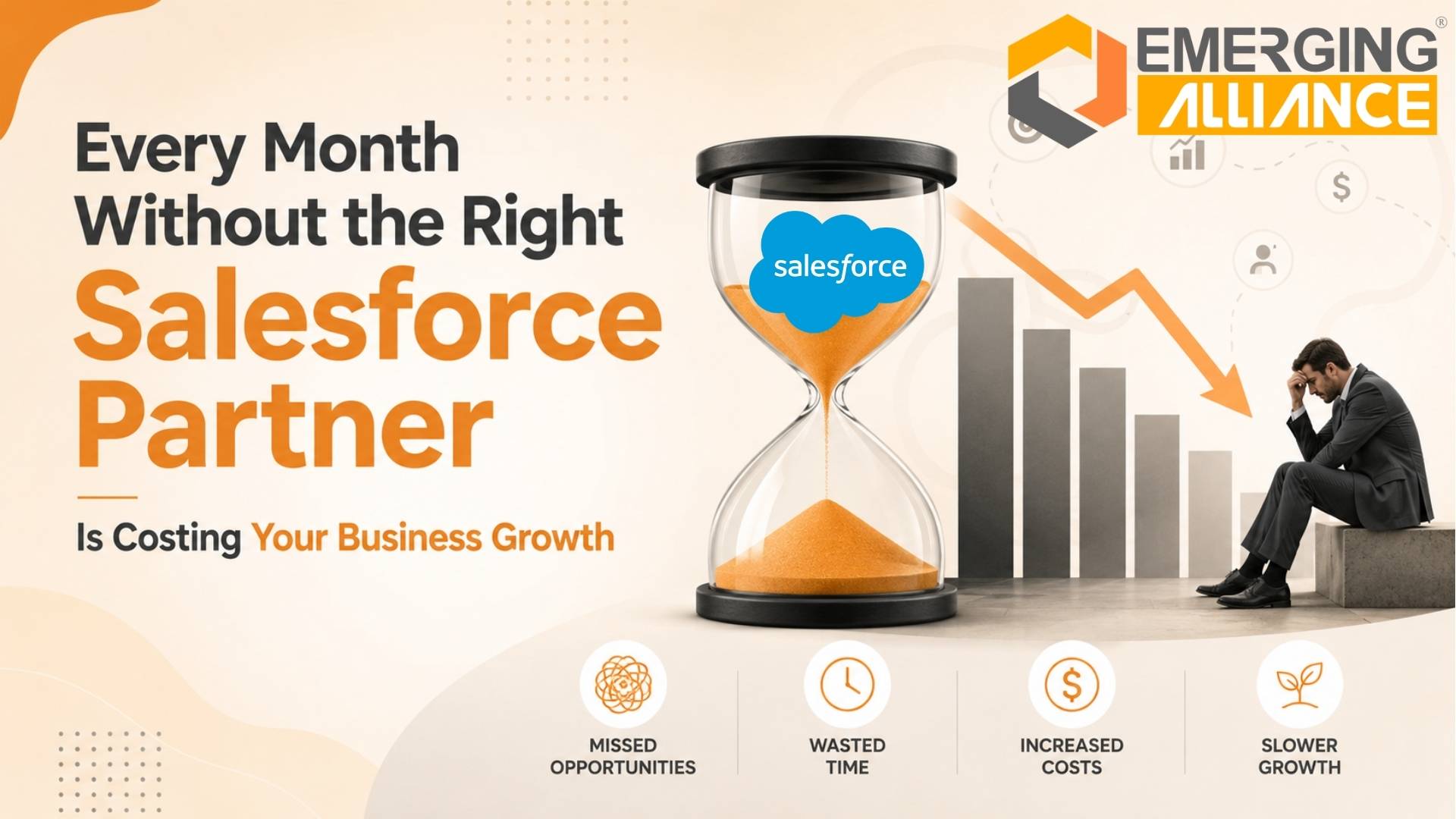
Every Month Without the Right Salesforce Partner Is Costing Your Business Growth
Boost Visibility, Efficiency, and Growth with a Salesforce Partner
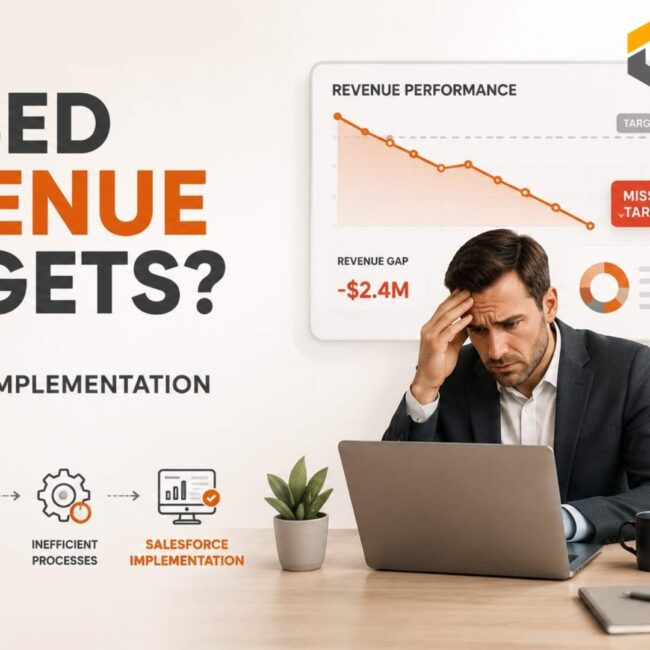
Every Salesforce Partner decision directly impacts how efficiently your organization operates, scales, and grows. Yet many enterprises continue to struggle with disconnected systems, manual processes, inconsistent reporting, poor customer visibility, and low CRM adoption.
The challenge is rarely the technology itself.
Most growth barriers emerge when organizations deploy a powerful platform but fail to align it with business processes, operational goals, and long-term transformation strategies. As a result, leadership teams lose visibility, sales teams lose productivity, service teams operate reactively, and executives struggle to make data-driven decisions.
Every month spent with the wrong implementation approach creates hidden costs that accumulate across the business.
The right Salesforce Partner helps eliminate these inefficiencies and transforms Salesforce into a strategic growth engine.
Why Enterprises Outgrow Basic Salesforce Implementation
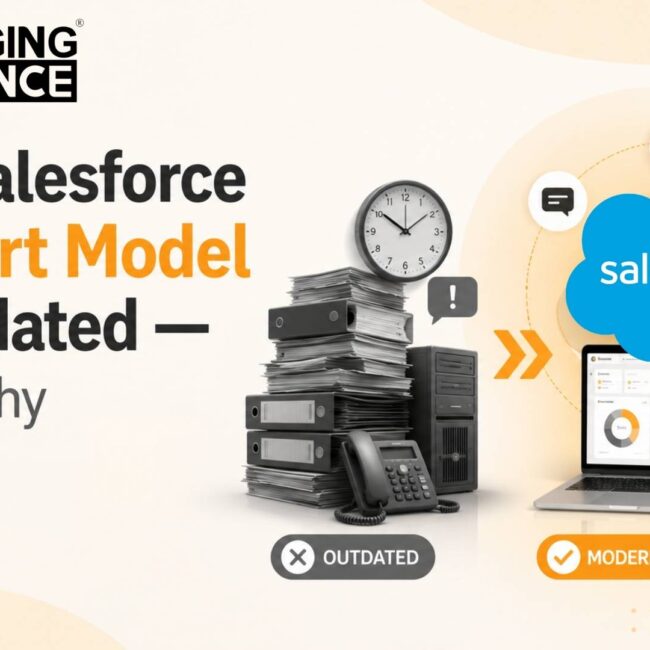
Many organizations initially invest in a Salesforce-based CRM solution expecting immediate improvements in sales performance and operational visibility.
However, business complexity grows faster than standard CRM deployments.
As companies expand across regions, product lines, departments, and channels, they often encounter:
- Data silos across departments
- Duplicate customer information
- Manual approval workflows
- Limited forecasting accuracy
- Inconsistent reporting structures
- Delayed decision-making
- Poor cross-functional collaboration
These challenges create operational friction that directly affects growth.
An experienced Salesforce implementation partner focuses on designing processes that scale with the organization rather than simply deploying software.
The objective is not system activation.
The objective is enterprise transformation.
How a Salesforce Consulting Partner Eliminates Visibility Gaps
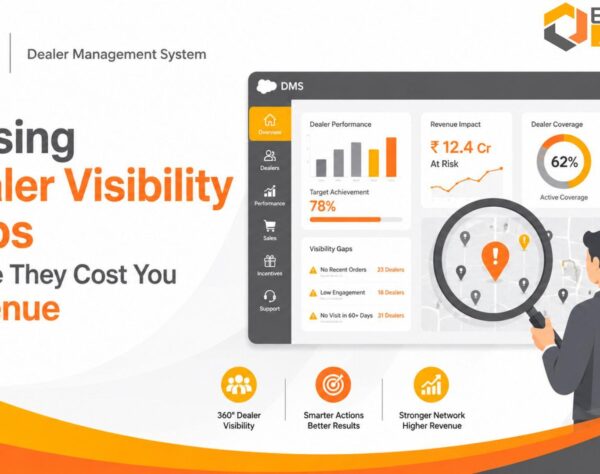
One of the most common executive complaints is the lack of reliable business visibility.
Sales reports differ from finance reports.
Operations teams maintain separate spreadsheets.
Customer service teams operate on disconnected systems.
Leadership spends valuable time reconciling conflicting information instead of driving strategy.
A Salesforce consulting partner addresses these challenges by creating a unified data ecosystem where information flows across departments in real time.
Key Business Benefits
- Single source of truth across teams
- Real-time sales and pipeline visibility
- Improved forecasting accuracy
- Faster executive reporting
- Better customer lifecycle tracking
- Reduced dependency on manual reporting
When visibility improves, decision-making improves.
And when decision-making improves, growth accelerates.
Salesforce Customization and Integrations Drive Operational Efficiency
Many enterprises discover that out-of-the-box functionality cannot support their unique operational requirements.
Approval hierarchies, industry-specific workflows, partner ecosystems, customer onboarding processes, and compliance requirements often demand advanced Salesforce customization.
The right Salesforce consultant helps organizations align technology with business reality.
Common areas where Salesforce customizations deliver value include:
Workflow Automation
Automating repetitive activities reduces delays and improves consistency across departments.
Opportunity Management
Custom sales workflows ensure opportunities progress through standardized stages.
Customer Service Operations
Automated escalation rules improve service responsiveness and customer satisfaction.
Compliance Management
Built-in controls help organizations maintain governance and audit readiness.
Executive Dashboards
Customized reporting provides leadership with actionable insights rather than raw data.
Combined with Salesforce integrations, organizations can connect ERP, finance, inventory, customer support, marketing, and third-party applications into a unified digital environment.
This eliminates duplicate data entry and improves process efficiency across the enterprise.
The Hidden Cost of Choosing the Wrong Salesforce Partner
Many organizations evaluate vendors primarily on implementation pricing.
This often becomes the most expensive decision in the long term.
A low-cost deployment that fails to support business objectives can create years of operational inefficiencies.
Common warning signs include:
- Low user adoption
- Excessive customization debt
- Poor system performance
- Inaccurate reporting
- Integration failures
- Process bottlenecks
- Escalating support costs
These issues increase the overall Salesforce implementation cost far beyond the original project budget.
The real financial impact appears through:
- Lost productivity
- Delayed revenue opportunities
- Increased operational expenses
- Reduced customer retention
- Slower business scalability
A strategic Salesforce implementation services provider focuses on long-term business outcomes rather than short-term deployment milestones.
Enterprise Salesforce Implementation Requires a Transformation Mindset
Successful organizations treat CRM transformation as a business initiative, not an IT project.
A modern Enterprise Salesforce implementation should support:
- Revenue growth initiatives
- Customer experience improvements
- Operational excellence programs
- Digital transformation strategies
- Data-driven decision making
- Scalable process automation
Consider a growing manufacturing company operating across multiple regions.
Sales teams struggle to track opportunities.
Operations teams lack visibility into customer commitments.
Finance teams spend days reconciling reports.
Leadership lacks confidence in forecasts.
After a structured Salesforce CRM implementation supported by the right partner, these departments operate through connected workflows, shared dashboards, and real-time reporting.
The result is not simply a better CRM.
The result is a more agile organization capable of scaling efficiently.
Why Salesforce Support Is Critical After Go-Live
Many organizations underestimate the importance of ongoing Salesforce support.
Business processes evolve.
Regulatory requirements change.
Customer expectations increase.
New products and services are introduced.
Without continuous optimization, CRM performance gradually declines.
Strong Salesforce services should include:
- Performance monitoring
- User adoption support
- Process optimization
- Security management
- New feature deployment
- Integration maintenance
- Reporting enhancements
Continuous improvement ensures Salesforce remains aligned with business goals as the organization grows.
This is where long-term partnerships create measurable value.
Choosing a Salesforce Partner That Supports Growth
When evaluating Salesforce partners, decision-makers should look beyond technical certifications.
The ideal partner should understand:
- Business operations
- Industry challenges
- Digital transformation initiatives
- Enterprise scalability requirements
- Change management strategies
- Process optimization frameworks
Questions leaders should ask include:
- Can they align Salesforce with our business strategy?
- Do they understand our industry-specific challenges?
- Can they support future growth initiatives?
- Do they provide long-term optimization services?
- Can they integrate Salesforce with existing systems?
The answers often determine whether Salesforce becomes a growth accelerator or another underutilized platform.
Transform Salesforce Into a Growth Platform with Emerging Alliance
Technology alone does not drive transformation.
Business outcomes do.
At Emerging Alliance, we help organizations move beyond basic Salesforce deployment to build scalable, connected, and growth-focused digital ecosystems.
Our team works closely with business leaders to align Salesforce implementation, Salesforce customization, Salesforce integrations, automation strategies, and ongoing optimization with measurable business objectives.
Whether you are planning a new Salesforce CRM implementation, modernizing an existing environment, or scaling enterprise operations, Emerging Alliance acts as a strategic transformation partner focused on long-term business value.
Ready to Unlock More Value from Salesforce?
If your organization is experiencing visibility gaps, workflow bottlenecks, slow decision-making, or growth limitations, it may be time to reassess your Salesforce strategy.
Frequently Asked Questions
1. How does a Salesforce Partner help improve business growth?
A Salesforce Partner aligns CRM capabilities with business processes, helping organizations improve visibility, automate workflows, increase productivity, and support scalable growth.
2. What is the difference between a Salesforce consultant and a Salesforce implementation partner?
A Salesforce consultant focuses on strategy, process optimization, and business alignment, while a Salesforce implementation partner manages deployment, configuration, integrations, and execution.
3. How much does Salesforce implementation cost for an enterprise?
Salesforce implementation cost depends on business complexity, user volume, integrations, customization requirements, and deployment scope.
4. Why are Salesforce integrations important for enterprise organizations?
Salesforce integrations connect CRM data with ERP, finance, marketing, and operational systems, creating a unified environment that improves efficiency and decision-making.
5. Can Salesforce customization improve operational efficiency?
Yes. Salesforce customization enables organizations to automate workflows, streamline approvals, reduce manual work, and improve user adoption.
6. What industries benefit most from Salesforce CRM implementation services?
Manufacturing, healthcare, financial services, retail, technology, professional services, and distribution organizations frequently benefit from enterprise CRM transformation initiatives.
7. How long does a Salesforce CRM implementation typically take?
Implementation timelines vary based on project complexity, integrations, data migration requirements, and organizational readiness.
8. What should organizations evaluate before selecting Salesforce partners?
Decision-makers should evaluate industry expertise, implementation methodology, support capabilities, integration experience, scalability expertise, and strategic consulting capabilities.
9. Why is post-implementation Salesforce support important?
Ongoing Salesforce support helps maintain system performance, improve user adoption, optimize workflows, manage upgrades, and ensure long-term business value.
10. How can a Certified Salesforce implementation partner improve ROI?
A Certified Salesforce implementation partner reduces deployment risks, improves process alignment, accelerates adoption, and helps organizations achieve measurable business outcomes faster.
Connect with Emerging Alliance today for a personalized consultation and discover how the right Salesforce Partner can help accelerate growth, improve efficiency, and maximize ROI.