
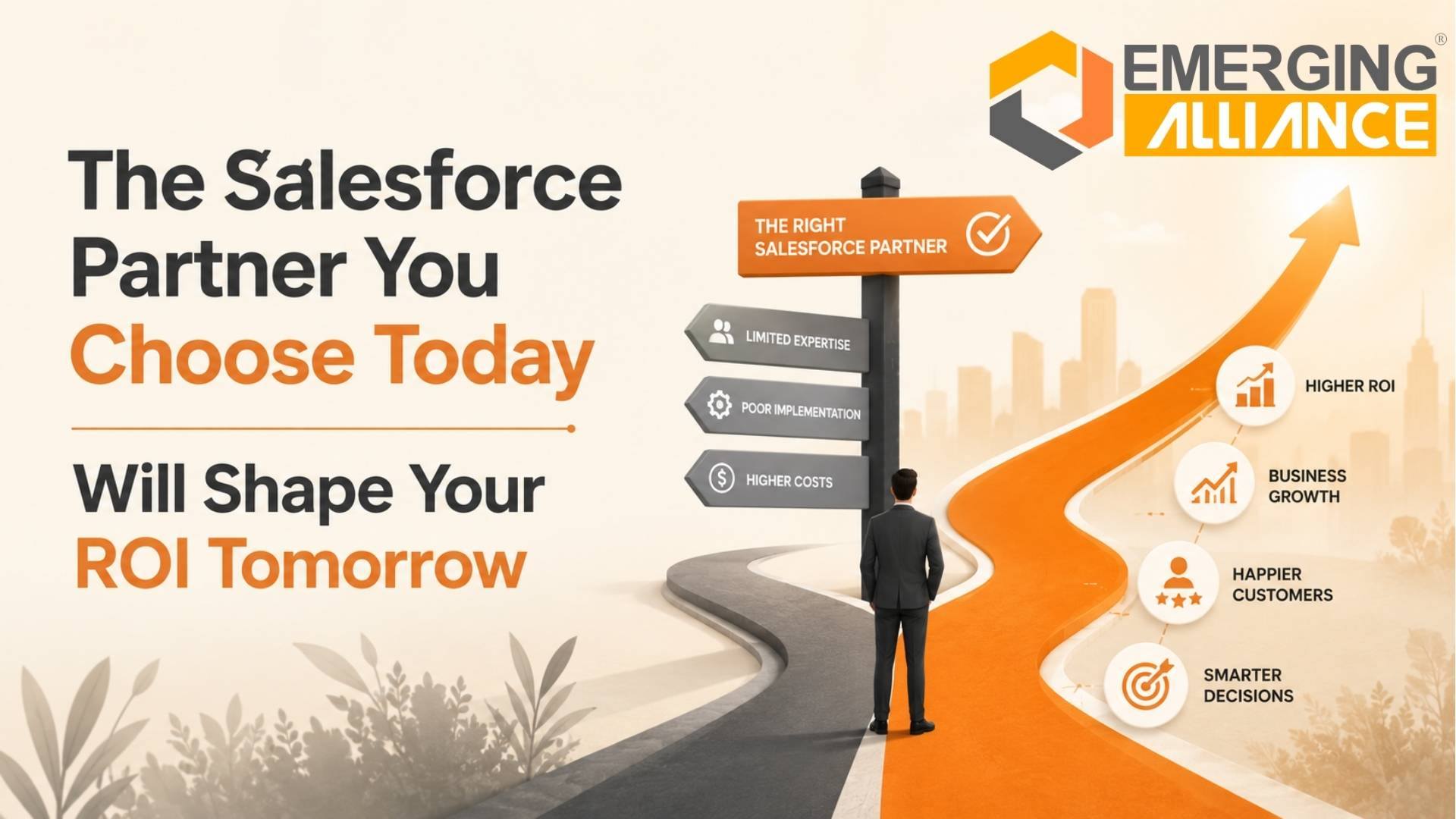
The Salesforce Partner You Choose Today Will Shape Your ROI Tomorrow
The Real ROI Gap Isn’t Salesforce — It’s Who Implements It
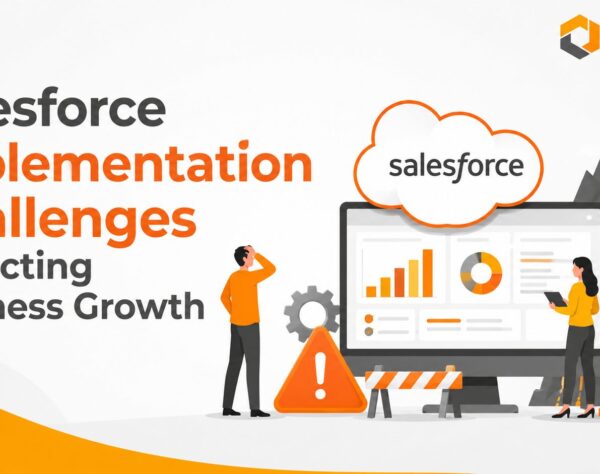
Digital transformation leaders often invest heavily in Salesforce expecting better visibility, stronger customer relationships, and improved operational efficiency. Yet many organizations struggle to achieve the expected return on investment. The problem is rarely the platform itself. The real challenge is selecting the right Salesforce Partner who can align technology with business objectives, operational processes, and long-term growth strategies.
A poorly executed implementation creates disconnected workflows, user adoption challenges, reporting inconsistencies, and rising support costs. A strategic implementation, however, transforms Salesforce into a revenue-driving business platform that supports enterprise scalability.
For Leaders, choosing the right implementation partner is one of the most important decisions in any CRM transformation initiative.
Why Your Salesforce Partner Directly Impacts Business ROI
Most enterprises don’t fail because of technology limitations. They fail because the implementation focuses on software deployment instead of business transformation.
A qualified Salesforce consulting partner evaluates business processes before configuring the platform.
Instead of asking, “How should Salesforce be implemented?” they ask:
- Where are revenue leakages occurring?
- Which workflows are slowing customer acquisition?
- What visibility gaps affect executive decisions?
- Which manual processes increase operational costs?
- Where are compliance and reporting risks emerging?
When implementation begins with business outcomes, Salesforce becomes a strategic growth platform rather than another enterprise system.
Organizations that prioritize business alignment typically achieve:
- Faster user adoption
- Better reporting accuracy
- Reduced operational inefficiencies
- Improved customer lifecycle management
- Stronger automation capabilities
- Higher executive visibility
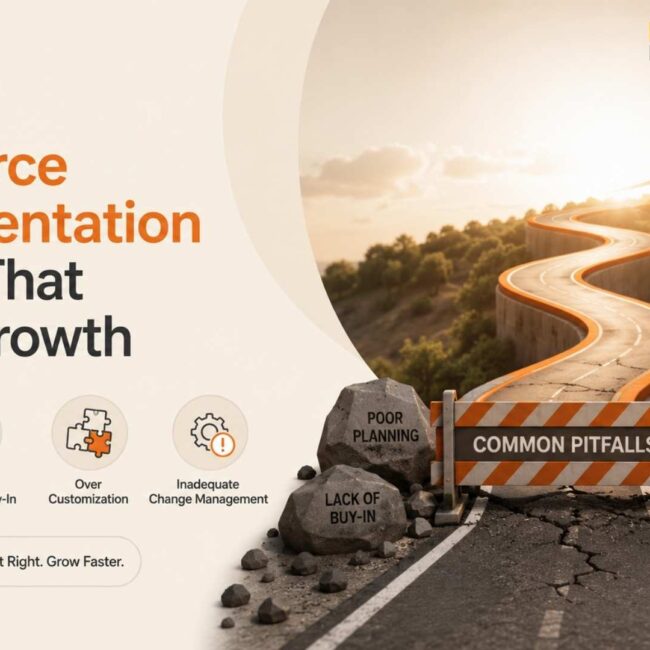
Salesforce CRM Implementation Failures Usually Begin Before Go-Live
Many organizations evaluate vendors primarily on implementation pricing.
This often leads to selecting a provider that focuses on technical deployment rather than organizational transformation.
A weak Salesforce CRM implementation often creates hidden operational challenges that become visible only after launch.
Common Warning Signs
Process Replication Instead of Process Optimization
Many implementations simply replicate inefficient manual workflows inside Salesforce.
The result:
- Automation opportunities are missed
- Approval cycles remain slow
- Teams continue working outside the system
- Productivity improvements never materialize
Limited Executive Reporting
Leadership teams need real-time business intelligence.
Without proper dashboard architecture and reporting frameworks:
- Revenue forecasting becomes unreliable
- Pipeline visibility decreases
- Customer insights remain fragmented
- Strategic planning becomes reactive
Poor Integration Strategy
Modern enterprises depend on multiple business applications.
Without integration planning, organizations experience:
- Duplicate data entry
- Inconsistent customer information
- Delayed reporting
- Increased administrative workload
A strategic Salesforce implementation partner addresses these challenges before deployment begins.
Enterprise Growth Requires More Than Salesforce Implementation Services
A successful CRM initiative extends beyond configuration and deployment.
Today’s enterprises require connected ecosystems across sales, service, marketing, finance, operations, and customer success.
The right Certified Salesforce implementation partner focuses on building a scalable operating model.
Sales Transformation
Using Salesforce CRM Systems, organizations can:
- Improve pipeline management
- Accelerate lead qualification
- Standardize sales processes
- Increase forecasting accuracy
Customer Service Optimization
With Salesforce Service Cloud, businesses can:
- Centralize customer interactions
- Improve case resolution speed
- Enhance customer satisfaction
- Create service-level accountability
Marketing Performance Enhancement
Through Salesforce Marketing Cloud, organizations gain:
- Better customer segmentation
- Automated campaign execution
- Improved engagement tracking
- Higher marketing ROI visibility
Executive Decision Intelligence
Modern leaders require:
- Real-time dashboards
- Cross-functional reporting
- Predictive insights
- Operational performance tracking
A strong Salesforce solution should support every strategic objective across the enterprise.
Why Salesforce Support Services Become Critical After Go-Live
Many organizations underestimate the importance of ongoing support.
The reality is that Salesforce continuously evolves through platform updates, business process changes, and organizational growth.
Without structured support, CRM performance gradually declines.
This is where Salesforce Support and Maintenance Services become essential.
High-Value Salesforce Support Functions
Salesforce Issue Detection and Resolution
Proactive monitoring helps identify:
- Workflow failures
- Integration disruptions
- Automation errors
- Reporting inconsistencies
Salesforce Admin Support
Dedicated administration ensures:
- User management
- Security governance
- Permission control
- Process optimization
Salesforce Development Services
As businesses grow, custom enhancements become necessary.
These may include:
- New automation workflows
- Industry-specific applications
- Advanced reporting capabilities
- Third-party integrations
Salesforce Managed Services
Ongoing managed services help enterprises:
- Reduce internal IT burden
- Maintain platform performance
- Improve user adoption
- Continuously optimize processes
Organizations that invest in long-term Salesforce support services often extract significantly more value from their CRM investment over time.
The Strategic Questions Every Enterprise Should Ask Before Choosing a Salesforce Partner
Selecting a vendor based solely on certifications or pricing can create long-term risks.
Instead, decision-makers should evaluate strategic capabilities.
Can They Understand Business Operations?
Your partner should understand:
- Revenue processes
- Customer lifecycle management
- Industry-specific workflows
- Compliance requirements
Do They Have Cross-Functional Expertise?
Enterprise transformation often requires alignment across:
- Sales
- Marketing
- Customer service
- Finance
- Operations
Can They Scale With Growth?
The implementation must support:
- New business units
- Geographic expansion
- Increased transaction volumes
- Future automation initiatives
Do They Offer Ongoing Support?
A true Salesforce Support and Maintenance Partner remains engaged after deployment to ensure continuous business value.
Are They Focused on Outcomes?
The right partner measures success through:
- Operational efficiency
- User adoption
- Revenue growth
- Process automation
- Executive visibility
Not merely system deployment.
Emerging Alliance: A Strategic Salesforce Partner for Enterprise Transformation
At Emerging Alliance, we believe Salesforce success is not measured by implementation completion.
It is measured by business outcomes.
Our approach combines:
- Enterprise process consulting
- CRM transformation strategy
- Salesforce implementation services
- Salesforce managed services
- Salesforce support services
- Integration and automation expertise
- Continuous optimization programs
We help organizations align technology investments with operational goals, enabling scalable growth, improved visibility, and measurable ROI.
Whether you are planning a new Salesforce deployment, optimizing an existing environment, or expanding across multiple Salesforce clouds, our team focuses on delivering business impact—not just technical execution.
Ready to Maximize Salesforce ROI?
The difference between a successful Salesforce investment and an expensive CRM project often comes down to one decision:
Choosing the right Salesforce Partner.
If your organization is evaluating Salesforce implementation, modernization, support services, or enterprise-wide transformation initiatives, Emerging Alliance can help you build a roadmap focused on measurable business outcomes.
Frequently Asked Questions
1. How do I choose the right Salesforce Partner for enterprise implementation?
Look for industry expertise, business process consulting capabilities, integration experience, support services, and a proven track record in enterprise transformation projects.
2. What is included in Salesforce implementation services?
Services typically include discovery, process mapping, configuration, customization, integrations, testing, deployment, user training, and post-go-live support.
3. What factors influence Salesforce implementation cost?
Pricing depends on business complexity, number of users, integrations, customization requirements, data migration scope, and support needs.
4. Why is Salesforce CRM implementation challenging for large enterprises?
Large organizations often face complex workflows, multiple systems, data silos, compliance requirements, and change management challenges.
5. What are Salesforce managed services and why are they important?
Salesforce managed services provide continuous administration, monitoring, optimization, support, and enhancement to maximize long-term platform performance.
6. How does Salesforce Service Cloud improve customer operations?
It centralizes customer interactions, automates case management, improves response times, and provides visibility into service performance.
7. Can Salesforce integrate with ERP, finance, and third-party applications?
Yes. Salesforce supports extensive integration capabilities with ERP systems, finance platforms, marketing tools, and industry-specific applications.
8. What role does automation play in Salesforce CRM systems?
Automation reduces manual work, accelerates approvals, improves accuracy, strengthens compliance, and increases operational efficiency.
9. How long does an enterprise Salesforce implementation process typically take?
Project duration depends on complexity, but enterprise implementations generally range from several weeks to multiple months.
10. How can organizations measure ROI from Salesforce implementation?
ROI can be evaluated through improved sales productivity, faster customer response times, better reporting visibility, reduced operational costs, and increased automation.
Schedule a consultation with our Salesforce experts today and discover how a strategic implementation approach can unlock greater efficiency, automation, visibility, and ROI across your enterprise.