
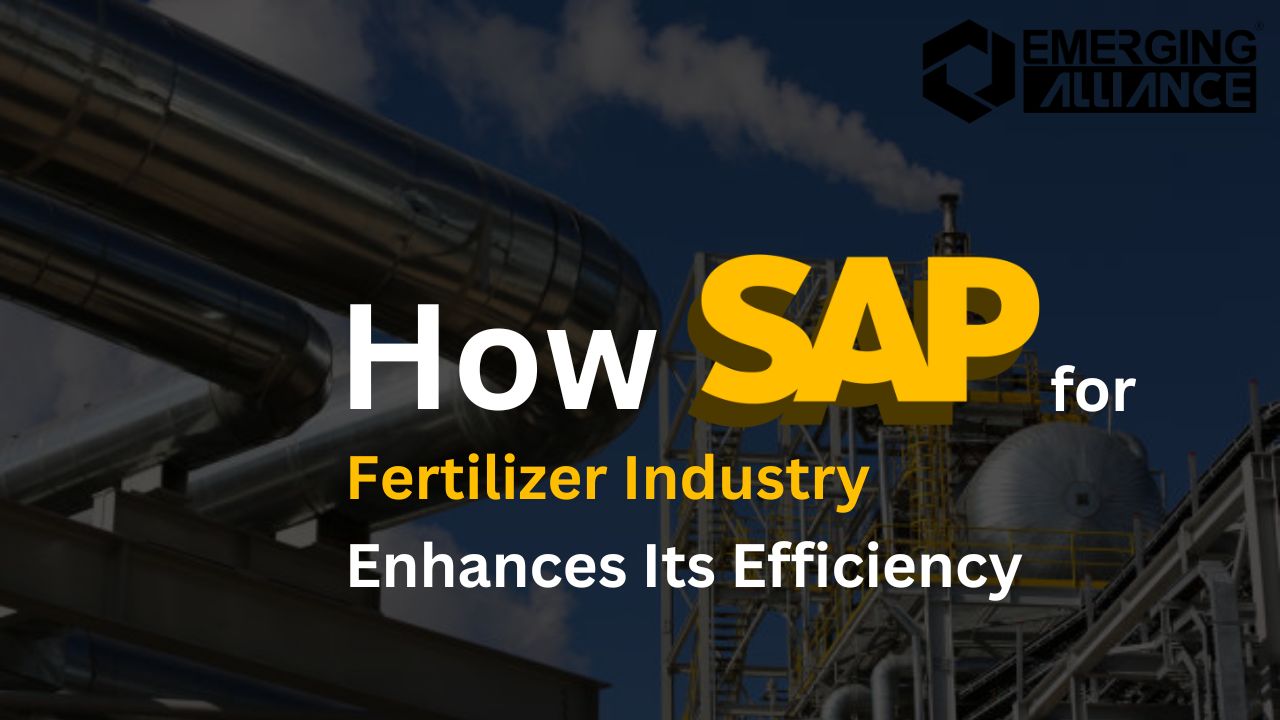
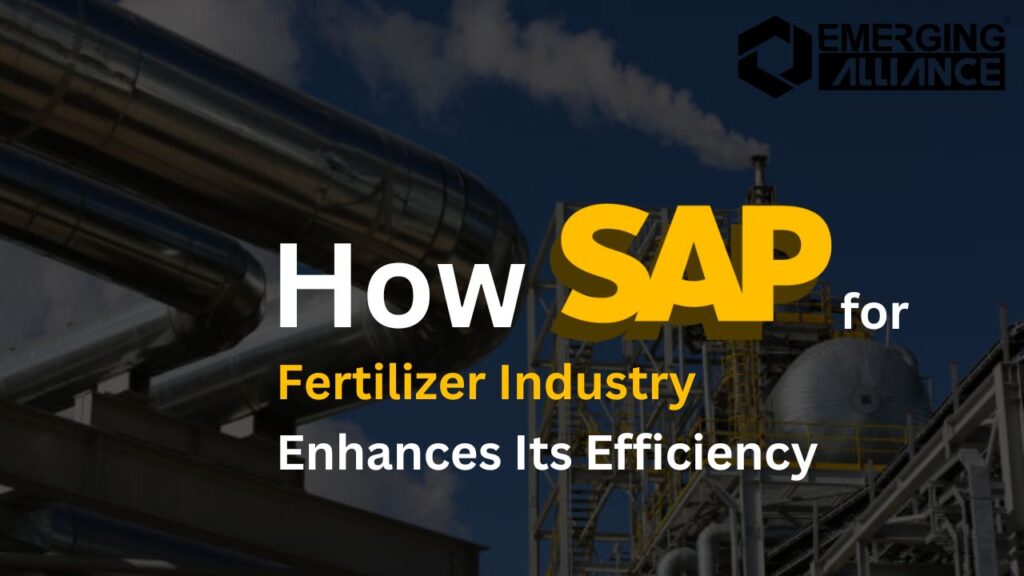
How SAP for Fertilizer Industry Enhances Its Efficiency
How SAP Boosts Profitability in the Fertilizer Industry
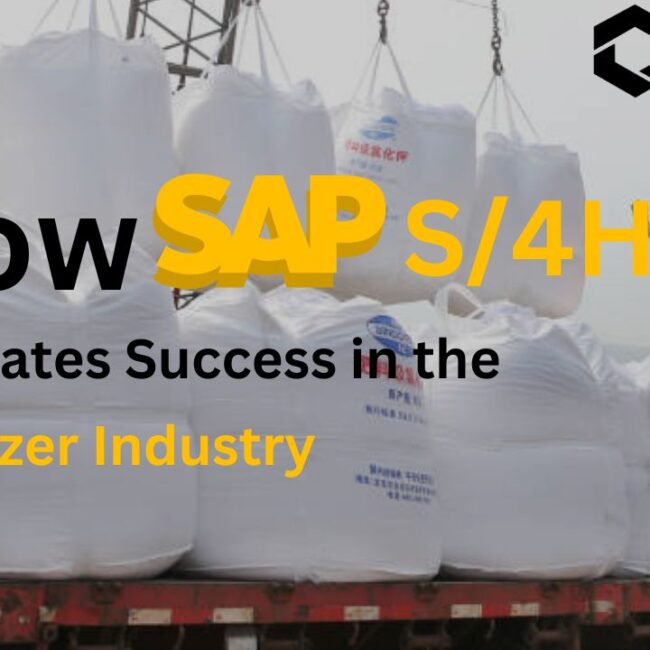
Fertilizers provide essential nutrients that enhance crop growth and agricultural productivity. After harvest, soil nutrients are depleted and need replenishment, a process that is slow and challenging without fertilizers, delaying crop production.Feeding the growing population requires more food production, with fertilizers playing a crucial role. Precise application and accurate management of raw materials are essential to avoid issues like soil degradation. Specialized SAP software can efficiently manage these complex processes in the fertilizer industry. Lets Delve into how SAP enhances the fertilizer manufacturers
Supplier Management with SAP for Fertilizer Industry
SAP ERP Supplier Management feature for fertilizer manufacturers streamlines the complex task of sourcing raw materials amidst logistical challenges and geopolitical tensions. It centralizes supplier data, tracks performance metrics, and alerts users about expired certifications, ensuring efficient vendor selection and high-quality material procurement.Manufacturing needs a constant supply of materials like phosphate rock, potash rock, and natural gas. But, amidst transportation challenges & geopolitical tension, delivering the raw materials on-time becomes a complex t
Scheduling Production with SAP ERP
SAP ERP enables manufacturers to leverage sales data, market insights, and customer orders to create precise production plans aligned with operational capabilities. This software aids in determining the necessary raw materials quantity and associated costs by analyzing production demand effectively.
Inventory Management and Procurement through SAP Software
SAP ERP allows for meticulous storage management based on specific requirements such as temperature, humidity, and other conditions crucial for maintaining the quality of phosphate and phosphorus rock. Additionally,SAP facilitates the handling and oversight of hazardous materials, ensuring compliance with safety regulations.
Formulation
SAP Solutions streamlines the process of creating well-balanced fertilizer blends tailored to different crop types and soil compositions. This involves managing multiple formula versions and intricate calculations, tasks prone to errors and time-consuming when handled manually. With ERP, these processes become more efficient and accurate, contributing to improved productivity and product quality.
The complexity of Fertilizer Industry manufacturing underscores the importance of adopting appropriate technology to reap significant benefits for manufacturers. In this regard, leveraging robust SAP ERP software, such as Emerging Alliance SAP for Fertilizer Manufacturing, can offer exceptional advantages.
To learn more about our services and solutions, visit us at: https://emerging-alliance.net/
Ready to dive deeper into the topics you love? Visit our website to explore a treasure trove of valuable content, resources, and insights that will captivate your mind and fuel your curiosity!
Want to speak to an expert? Fill in the form below, and we will be in touch with you shortly!
FAQs About SAP for Fertilizer Industry
1. How does SAP improve profitability in fertilizer manufacturing?
SAP improves profitability by integrating procurement, production planning, inventory control, formulation management, and compliance into a single system. This reduces raw material wastage, improves production yield, lowers carrying costs, optimizes supplier selection, and enhances demand forecasting accuracy.
2. Which SAP modules are most relevant for the fertilizer industry?
Key modules include SAP S/4HANA for core ERP, SAP MM (Materials Management), SAP PP (Production Planning), SAP EHS (Environment, Health, and Safety), SAP QM (Quality Management), and SAP Ariba for supplier collaboration. These modules collectively support end-to-end fertilizer manufacturing operations.
3. How does SAP help manage raw material volatility in the fertilizer sector?
SAP enables real-time tracking of raw materials such as phosphate rock, potash, and natural gas. Advanced analytics and forecasting tools help manufacturers respond to price fluctuations, geopolitical disruptions, and transportation delays by adjusting procurement strategies and production plans.
4. Can SAP support fertilizer blend formulation and version control?
Yes. SAP manages complex fertilizer formulations with version control, bill of materials (BOM) accuracy, and batch traceability. It reduces calculation errors, ensures consistency in nutrient composition, and maintains regulatory compliance for different markets.
5. How does SAP improve supplier management for fertilizer companies?
SAP centralizes supplier data, monitors vendor performance, tracks certifications, and evaluates compliance records. This allows manufacturers to mitigate supply chain risks and ensure high-quality raw material sourcing.
6. Does SAP help with hazardous material and regulatory compliance?
Yes. SAP EHS supports regulatory reporting, hazardous material tracking, safety data sheet (SDS) management, and environmental compliance. This is particularly critical in fertilizer manufacturing due to chemical handling requirements.
7. How does SAP optimize production scheduling in fertilizer plants?
SAP PP aligns production schedules with sales forecasts, seasonal demand, plant capacity, and raw material availability. This reduces downtime, prevents overproduction, and improves plant utilization rates.
8. Can SAP reduce inventory holding costs in fertilizer manufacturing?
SAP enables real-time inventory visibility, automated replenishment planning, and storage condition monitoring. This prevents overstocking, reduces spoilage, and lowers working capital tied up in raw materials and finished goods.
9. How does SAP support quality control in fertilizer production?
SAP QM integrates quality inspection processes at procurement, production, and distribution stages. It ensures nutrient consistency, batch traceability, and compliance with agricultural standards.
10. Is SAP suitable for small and mid-sized fertilizer manufacturers?
Yes, provided the implementation scope matches operational complexity. SAP offers scalable solutions, including cloud-based deployments, that can be configured for mid-sized manufacturers seeking process standardization and growth readiness.